
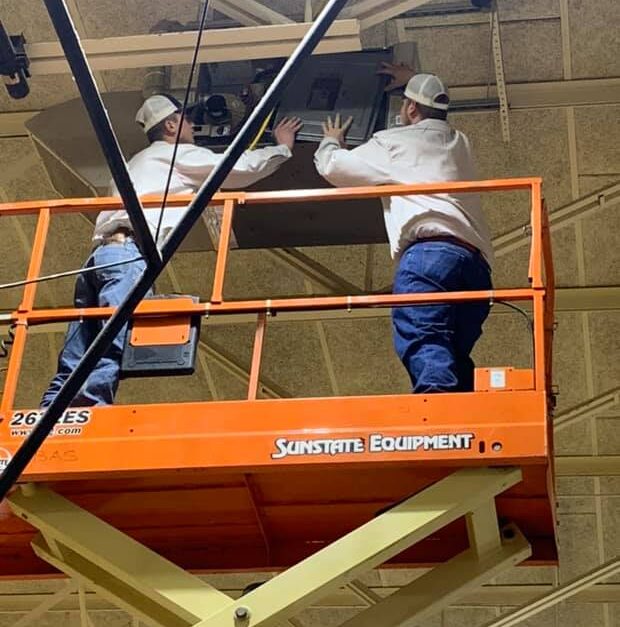
In need of Commercial Air Conditioning System in San Gabriel?
Climate Control A/C & Heating supports cooling, heating and the air indoors in the surrounding towns.
Call 512-446-4020 to talk it through.
A Hot, Wet Climate – Built for a Long Haul
Warm weather in San Gabriel stretches across much of the calendar; the machine on the pad outside is among the busiest appliances a household owns.
Sticky air can make a cool room feel uncomfortable, and the coil is where the moisture condenses and drains away.
Right sizing, steady airflow and a clean coil therefore decide how a house feels, long before a breakdown ever happens.
Inside an Air Conditioner: the Basics Worth Knowing
An air conditioner does not create cold; it collects heat inside the house and dumps it into the outdoor air.
Inside the house, the evaporator coil does the absorbing; the outdoor cabinet houses the compressor, the condenser coil and a fan.
Parts that wear out fastest are usually the small electrical ones; the compressor itself can last a long time when it is kept clean and properly charged.
When the House Stops Cooling: a Look at Common Failures
Good AC repair is detective work before it is wrench work; three very different faults can feel identical from the thermostat.
When the outdoor fan hums but will not spin, a capacitor is often the reason, and they usually repair cleanly because the parts are small.
Frost on the indoor coil or the copper line is a warning sign, not a cooling success; the coil needs to thaw completely before anyone can measure what is going on.
Low refrigerant means a leak, because the charge stays put when the loop is tight, and adding more without finding the leak only delays the same problem.
Water around the air handler often means the condensate line has clogged with slime, and the fix is usually quick once the blockage is found.
Warning Signs – What Owners Notice First
Most breakdowns announce themselves with small changes in behavior, and the following signs are worth acting on:
- One end of the house that feels warmer while the system runs nonstop.
- A buzzing or clicking sound at startup, whether or not the cooling seems to work.
- Short, frequent cycling of the outdoor unit; parts wear faster.
- Water around the air handler, which deserves a look before damage spreads.
Routine Care: Catching Trouble Before It Grows
Regular AC maintenance trims the chance of a breakdown during the hottest week, and the work centers on airflow, cleanliness and electrical health.
The air filter is the part most under the homeowner's own control, and how often it needs changing depends on the filter type, pets and the season.
Dirt on the condenser makes the compressor run hotter, so that coil gets cleaned too; the report reflects measurements rather than guesses.
When Replacement Makes Sense: How Owners Decide
An old unit that needs repair after repair may be a candidate for AC replacement, and a good evaluation lays out repair and replacement side by side.
A system built around a retired refrigerant can be a poor candidate for major repairs, and that can tip a close decision toward replacement.
Variable-speed designs hold temperature and humidity more precisely than single-stage units, which matters most where the system runs for months.
Matching a System to a House: Where Good Results Begin
An air conditioning install starts with a load calculation, not a rule of thumb, and two houses of the same size can need very different equipment.
Too much capacity leads to short cycling, uneven rooms and a clammy feel; one that is too small never reaches the setpoint on the hottest days.
The outdoor pad, the line set, the electrical disconnect and the drain all need planning, and local permit and inspection rules apply in most towns.
Ductwork Matters: the Lungs of the House
The duct system is as much a part of comfort as the unit that feeds it; undersized trunks, kinked runs and open seams all choke the flow.
Ducts that run through a hot attic lose a surprising amount of cooling on the way to the rooms, and sealing with mastic rather than cloth tape holds up better in the heat.
Clearing Out the Channels: What It Can and Cannot Do
Air passages collect dust, and duct cleaning is the way to clear it from the inside; construction dust, rodents or visible mold growth are the usual reasons to schedule it.
Cleaning pays off only when the source of the dirt is also addressed, and be cautious of anyone who promises that cleaning will cure every problem.
The Two-Way Heat Mover – Efficient Most of the Year
A heat pump is an air conditioner that can run backward to warm the house; in Texas, cold snaps are short, so a heat pump covers most of the heating season.
When outdoor temperatures fall far enough, electric strips or a furnace add the missing warmth, and a technician can check whether the strips are running more than they should.
Gas Furnaces: Reliable Heat for Cold Fronts
The sequence in a gas furnace runs from thermostat call to draft fan, igniter, gas valve and flame proof, and the sequence is why furnaces need testing before cold weather.
Safe furnace operation depends on clear venting and working carbon monoxide alarms, and a detector near the sleeping areas gives early warning.
Heating With Electricity: What to Expect From It
Elements in an electric air handler turn current directly into heat, and the equipment is simple, with few moving parts.
Compared with a heat pump, strips and electric furnaces draw heavily for the heat they make, and a technician can explain how each option behaves in a mild climate.
Getting Ready for Cold Weather: Planning for Sudden Cold
Heating season in this part of Texas is brief, with sudden swings between warm days and freezing nights, and a test on a mild day beats a surprise on a freezing one.
Furnaces, heat pumps and electric air handlers all heat homes, and each has its own checkup list; the common thread is clean air passages and a blower that moves enough air.
Hot-Water Heating – Radiators, Coils and Radiant Floors
Boiler systems appear in older buildings, larger properties and some commercial spaces, and the parts, from circulators to expansion tanks, differ from forced-air equipment.
The relief valve and low-water cutoff protect a boiler, so they get tested during service, and bleeding air from the loops is a routine task.
What You Breathe at Home – Sources, Symptoms and Solutions
Indoor air quality describes what is floating in the air inside a building, from dust and pollen to odors and humidity, and in Texas, cedar pollen and spring dust can find their way inside.
MERV numbers describe how fine a filter catches, and the right one balances capture with airflow; humidity control prevents the conditions mold needs.
Larger buildings circulate air through central equipment, so one fault can reach every room; ventilation rules for occupied spaces set a baseline.
Air Purification Options – Useful, With Realistic Goals
Purifiers remove particles or gases from the air, and they come as whole-home units or portable room models; any claims about performance should be checked against the specification.
A purifier works alongside good ventilation and a clean system, not in place of them, which is why one device rarely fits every home.
Managing Growth Inside the System: Understanding the Options
Lamps inside the cabinet work on the coil and pan, and they need replacing on a schedule, and results depend on placement, dose and the lamp type.
An antimicrobial mist is sprayed or fogged onto surfaces inside the system or the building; the underlying cause still has to be fixed.
Ventilating – Not Too Much, Not Too Little
Ventilating also removes moisture from kitchens and baths before it settles into the structure; the cooling equipment has to be sized to handle the fresh air coming in.
A hot attic loads up the ceiling and the ducts, so attic ventilation and insulation help the system, and this is another reason the whole building matters.
Commercial Cooling: Uptime Matters
A commercial AC system is often a rooftop package unit that holds the compressor, the coils and the blower in one cabinet, and when it fails the business feels it quickly.
Control settings, schedules and thermostats on commercial systems deserve a look when comfort complaints begin; planning a changeout around business hours limits disruption.
Chiller Systems for Larger Buildings: Parts and Service Needs
A chiller is a large refrigeration machine that chills water for use in many spaces, and the plant includes a chiller, pumps, a cooling tower or air-cooled condenser, and controls.
Commercial Refrigeration – Why Failures Matter Fast
Refrigeration service covers walk-in coolers, reach-in units, freezers, display cases and ice machines; frost buildup, warm product and constant running all point to trouble.
How Climate Control A/C & Heating Looks at Commercial Air Conditioning System throughout San Gabriel
A good service call begins with listening to what the owner has noticed; the owner understands the situation before any decision.
A repair, a tune-up and a replacement are each described for what they are and what they involve, and the owner stays in control of the decision.
Let's Talk About Your Equipment
Phone 512-446-4020 to describe what is going on and find the next step.
Closing Thoughts – Equipment, Airflow and Air Quality
From Commercial Air Conditioning System to routine upkeep, good outcomes come from understanding the equipment and caring for it; reach Climate Control A/C & Heating at 512-446-4020 when you are ready.