
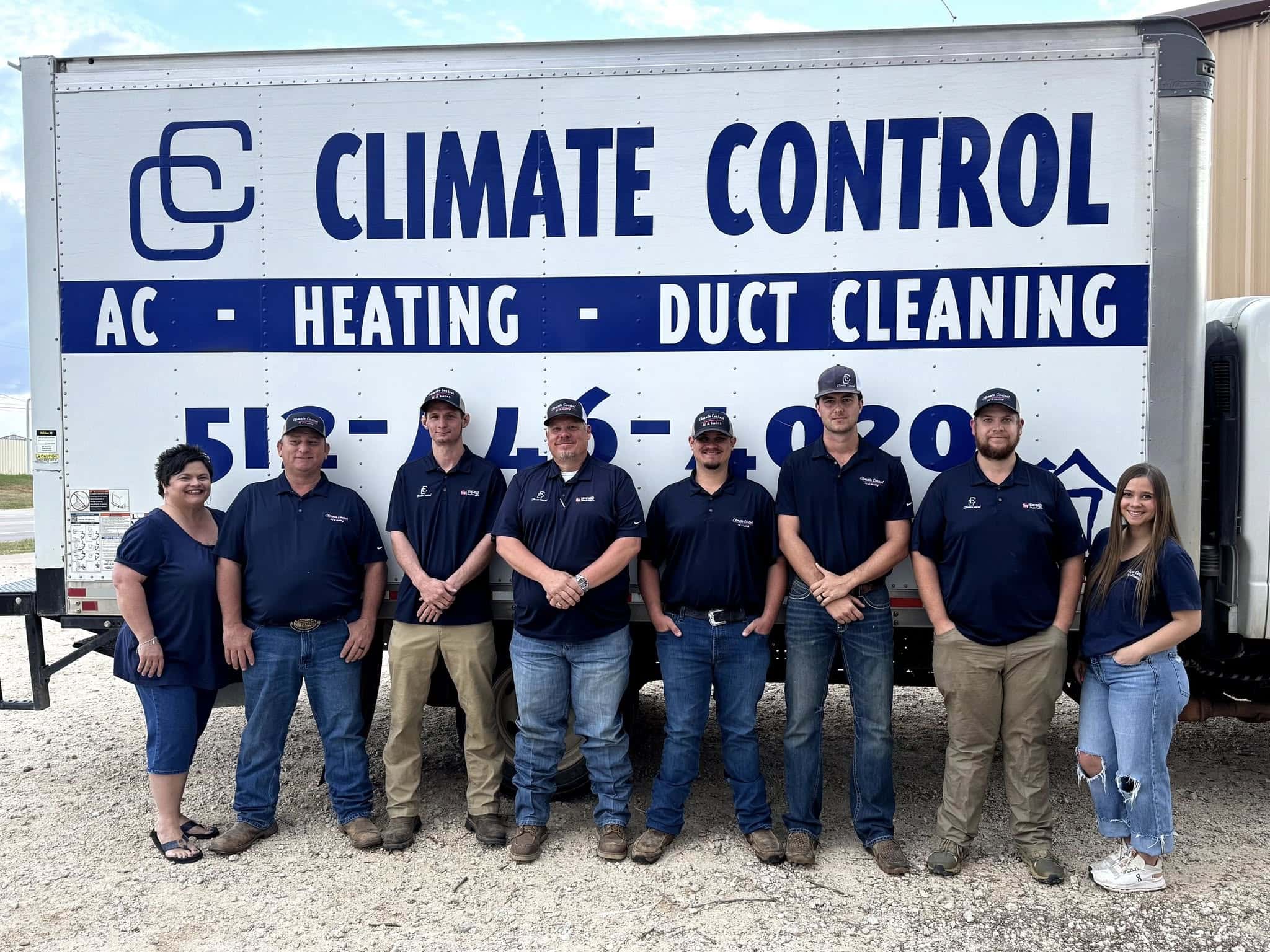
Shopping around for Duct Cleaning around San Gabriel?
Climate Control A/C & Heating looks after heating, cooling and indoor comfort in the surrounding towns.
Contact us at 512-446-4020 and tell us what you are noticing.
Heat and Humidity: Local Conditions Come First
A San Gabriel summer stacks hot afternoon after hot afternoon, and a home air conditioner may run most of the day through the worst of it.
Water vapor rides along with the heat on a muggy afternoon; a cooling system dehumidifies only when the compressor is on and air is moving across the coil.
Proper equipment size, good airflow and clean surfaces separate a comfortable house from a clammy one, whatever the label on the box promises.
How Air Conditioning Works – Heat Moves, Cold Is Not Made
Cooling equipment does not manufacture chill; refrigerant picks up warmth from indoor air and carries it outside.
The indoor coil is where the cooling happens; the outdoor cabinet houses the compressor, the condenser coil and a fan.
Fan motors and start components do a great deal of work for their size; a failed capacitor is often a small repair rather than the end of the system.
When the House Stops Cooling: Repair Starts With Diagnosis
Air conditioning repair begins with finding out why the system quit, not with swapping parts; the same warm room can come from a dead capacitor, a frozen coil or a leak.
A tripped breaker, a failed capacitor or a worn contactor keeps the outdoor unit from starting; the diagnosis comes before any decision about a bigger job.
Ice on the lines almost always means too little air or too little refrigerant, and running the system while it is frozen can damage the compressor.
A properly working system keeps its charge for good, since nothing burns it off; topping off a leaking system is a temporary patch that lets the problem return.
Clogged condensate drains are a quiet cause of water stains and shutdowns; moisture removed from muggy air adds up to gallons a day.
Warning Signs – What Owners Notice First
Air conditioners seldom quit without hints along the way, and every item below is a reason to schedule a visit:
- Rooms that stay warm even with the thermostat set low.
- Loud banging when the compressor starts, particularly at the start of a cycle.
- A system that turns on and off in short cycles, along with a higher electric bill.
- Damp spots on the ceiling below the indoor cabinet, often tracing back to the drain line.
Tune-Ups for Cooling Gear: What a Maintenance Visit Covers
Air conditioning maintenance keeps dust, grime and wear from piling up unseen, and the visit usually combines cleaning, measuring and tightening.
The air filter is the part most under the homeowner's own control; the label on the filter and the look of its surface are a reliable guide.
The visit usually includes the condenser coil, the evaporator coil and a flush of the drain line; tightening electrical connections is a standard part of the job.
Deciding on a New System – a Decision Worth Making Carefully
AC replacement becomes a real question when a system is old, repeatedly broken or hard to keep comfortable, with the condition of the compressor and coils weighing heavily.
A system built around a retired refrigerant can be a poor candidate for major repairs; matching parts and refrigerant correctly keeps the whole loop reliable.
Today's units move the same heat with less power than equipment from a generation ago; the benefit grows in houses that rely on cooling much of the year.
Sizing and Setup – a Calculation, Not a Guess
Air conditioning install quality depends on matching capacity to what the building actually needs; windows, attic insulation and ductwork all change the answer.
Too much capacity leads to short cycling, uneven rooms and a clammy feel; careful sizing protects comfort and the equipment.
The indoor and outdoor parts have to match each other and the ductwork; the owner then gets a walk-through of the thermostat and the filter.
Ductwork Matters: Moving Air Efficiently
In many houses, the ducts decide whether a new system performs as promised, which is why the airflow measurement is part of a proper diagnosis.
Leaks at joints pull attic air into the system and push cooled air out into the rafters, and a technician can often find the leaks with a pressure test.
Cleaning the Air Paths – Deciding if It Fits
Duct cleaning removes dust and debris from the supply and return runs, the registers and the blower compartment, and it makes the most sense after a renovation, a pest problem or visible contamination.
Dirt returns quickly if the filter is poor or the returns leak unfiltered air, and a careful provider will show the owner what was found inside.
The Two-Way Heat Mover – Efficient Most of the Year
Instead of burning fuel, heat pumps pull warmth from outdoor air and carry it inside, and that makes them efficient in climates with mild winters.
Auxiliary heat strips back up the heat pump on the coldest mornings, but a heat pump that always needs the backup may have a fault.
Gas Furnaces – Parts, Safety and Service
Inside a gas furnace, a burner lights, a heat exchanger warms up and the blower pushes air across it, and the sequence is why furnaces need testing before cold weather.
A technician checks venting, gas pressure and the heat exchanger during a furnace tune-up; never ignore an alarm or a smell of gas.
Electric Furnaces and Air Handlers: Simple Equipment, Steady Output
An electric furnace passes air over banks of resistance elements that glow when energized; the electrical safety devices do the most important work.
The trade-off with electric heat is simple equipment against higher running use; the decision rests on the building, not just the equipment.
Winter Preparation: Short Winters Still Bite
Winters in Texas are short, but cold fronts can drop temperatures sharply in a matter of hours, and a test on a mild day beats a surprise on a freezing one.
From gas furnaces to heat pumps, each heating system needs different attention before winter, and the safety controls get tested along with the comfort ones.
Hot-Water Heating: Found in Older and Larger Buildings
Radiant floor and baseboard heating both rely on a boiler to heat the water; an owner with a boiler should look for experience with water-based heat.
A boiler tune-up checks combustion, water level, pressure and the controls that keep it safe; leaks near joints deserve prompt attention.
Air Quality Basics – the Part You Cannot See
Indoor air quality describes what is floating in the air inside a building, from dust and pollen to odors and humidity; the equipment that moves air is also the equipment that carries the contaminants.
Choosing a filter means balancing how much it removes against how much resistance it adds; humidity control prevents the conditions mold needs.
Larger buildings circulate air through central equipment, so one fault can reach every room; ventilation rules for occupied spaces set a baseline.
Air Purification Options – Useful, With Realistic Goals
Purifiers vary widely, from simple filters to units combining filtration, carbon and other methods; a device that makes bold promises deserves a second look.
Buying a purifier without fixing a moisture problem treats a symptom and misses the cause, which is why one device rarely fits every home.
UV Lights and Antimicrobial Mist – Tools for a Damp Climate
UV lights install in the air handler and shine on the indoor coil and drain pan to limit microbial growth; bulbs lose strength over time and need changing.
An antimicrobial mist is sprayed or fogged onto surfaces inside the system or the building; the product and method should be explained in advance.
Ventilation Done Right: Balance in a Humid Climate
Planned ventilation brings in measured amounts of outdoor air and exhausts the stale air; the cooling equipment has to be sized to handle the fresh air coming in.
Attic ventilation is a separate matter, but it affects how hard the cooling system works, and this is another reason the whole building matters.
Cooling for Shops, Offices and Buildings – Equipment Built for Heavier Duty
Every commercial air conditioning system serves a space with different loads from a house, such as crowds, lighting and equipment; planned maintenance keeps surprises to a minimum.
Coil cleaning, belt checks and economizer inspections are part of keeping commercial equipment dependable; planning a changeout around business hours limits disruption.
Cooling at Scale – Big Buildings, Big Loads
A chiller is a large refrigeration machine that chills water for use in many spaces, and the plant includes a chiller, pumps, a cooling tower or air-cooled condenser, and controls.
Refrigeration Service – Why Failures Matter Fast
Refrigeration equipment uses the same basic cycle as air conditioning but at much lower temperatures; regular cleaning of condenser coils matters even more than in comfort cooling.
How Climate Control A/C & Heating Works Through Duct Cleaning around San Gabriel
The technician asks what changed, what is happening and how long it has been going on; the owner understands the situation before any decision.
Recommendations come with explanations, so choices rest on information rather than pressure; nothing starts without a clear understanding.
Questions About Your System Are Welcome
Dial 512-446-4020 to describe what is going on and find the next step.
What to Remember: Small Habits, Big Difference
Searching for Duct Cleaning in San Gabriel usually leads to the same few questions about size, age, airflow and care; reach Climate Control A/C & Heating at 512-446-4020 when you are ready.