
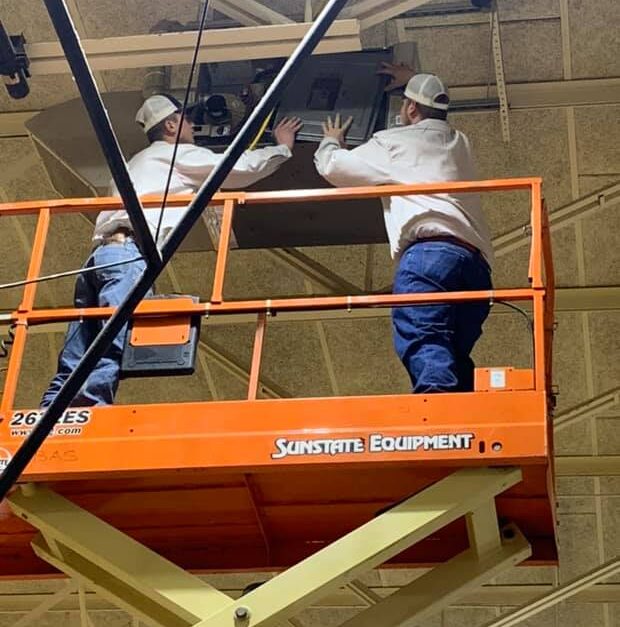
Trying to find Commercial Air Conditioning System across Val Verde?
Climate Control A/C & Heating works on heating, cooling and indoor comfort in the local area.
Contact us at 512-446-4020 to talk it through.
The Cooling Season – Built for a Long Haul
Warm weather in Val Verde stretches across much of the calendar; the machine on the pad outside is among the busiest appliances a household owns.
Humidity is half of the comfort problem, not an afterthought; the indoor coil acts as the dehumidifier, collecting water that leaves through a drain line.
Right sizing, steady airflow and a clean coil therefore decide how a house feels, even before anything breaks.
How Air Conditioning Works – Heat Moves, Cold Is Not Made
A central air conditioner is a heat mover, not a cold maker; a sealed loop of refrigerant absorbs heat at one point and releases it at another.
Inside the house, the evaporator coil does the absorbing; the outdoor cabinet houses the compressor, the condenser coil and a fan.
Parts that wear out fastest are usually the small electrical ones; a failed capacitor is often a small repair rather than the end of the system.
Diagnosing a Weak Cooling System: Repair Starts With Diagnosis
A thorough air conditioning repair starts with a diagnosis rather than a hunch, and a house that is warm may have an electrical fault, an airflow problem or a refrigerant problem.
A tripped breaker, a failed capacitor or a worn contactor keeps the outdoor unit from starting; the diagnosis comes before any decision about a bigger job.
Frost on the indoor coil or the copper line is a warning sign, not a cooling success; shutting the cooling off is the safest response until someone inspects it.
Refrigerant is sealed in a loop and does not get used up, which is why measuring pressures and temperatures matters more than adding gas.
A blocked drain line can back water into the pan and trip a safety switch, and clearing the line is routine maintenance work.
Warning Signs – What Owners Notice First
Air conditioners seldom quit without hints along the way; these are the signs a homeowner can see, hear or feel without any tools:
- Uneven temperatures from room to room even though the blower sounds normal.
- Loud banging when the compressor starts, whether or not the cooling seems to work.
- Repeated short runs that never finish a cooling cycle, even though the thermostat is satisfied.
- Condensation where there should be none, sometimes from a dirty coil.
Routine Care – the Work Behind Reliable Comfort
Air conditioning maintenance keeps dust, grime and wear from piling up unseen; the checklist stays short enough to repeat every season.
Filters catch the dust that would otherwise coat the indoor coil, and how often it needs changing depends on the filter type, pets and the season.
Coils, drain pans and drain lines all get attention during a complete tune-up, and reading the numbers shows whether anything is drifting out of range.
Time for a Change – Age, Condition and Efficiency
Replacement is worth considering once repairs pile up on equipment that was already aging, with the condition of the compressor and coils weighing heavily.
A system built around a retired refrigerant can be a poor candidate for major repairs; matching parts and refrigerant correctly keeps the whole loop reliable.
Efficiency has improved steadily, and a modern system can use noticeably less electricity, which matters most where the system runs for months.
Sizing and Setup – Bigger Is Not Better
Air conditioning install quality depends on matching capacity to what the building actually needs, which is why square footage alone is a poor guide.
A unit that is too large satisfies the thermostat fast and leaves the humidity behind; one that is too small never reaches the setpoint on the hottest days.
A complete installation pairs the condenser, the coil and the air handler as one system; the owner then gets a walk-through of the thermostat and the filter.
Ductwork Matters – Where Comfort Is Won or Lost
A duct system is the network of channels that carry conditioned air to every room and returns it for re-cooling, and a unit can be fine while the ducts hold the whole system back.
A long flexible run through a hot attic needs support, sealing and good insulation, and sealing with mastic rather than cloth tape holds up better in the heat.
Dust, Debris and Ductwork: Realistic Expectations
Air passages collect dust, and duct cleaning is the way to clear it from the inside; a house with no such history may not need it often.
Clean ducts work best alongside a good filter and sealed connections, and be cautious of anyone who promises that cleaning will cure every problem.
Reversible Systems – Efficient Most of the Year
Heat pumps move heat in both directions, cooling in summer and heating in winter; one outdoor unit does the work of two.
A heat pump may call on backup heat during a hard freeze or while defrosting its coil, and a technician can check whether the strips are running more than they should.
Furnace Basics: What Owners Should Know
Gas furnaces burn natural gas or propane in a burner and pass the heat through a heat exchanger; the flue and combustion air must be clear for safe operation.
A technician checks venting, gas pressure and the heat exchanger during a furnace tune-up, and stored items near the unit can block airflow and combustion air.
Electric Furnaces and Air Handlers: Simple Equipment, Steady Output
Electric heat uses sequenced elements, relays and limit switches to warm the house, and the main wear items are the elements, the sequencers and the blower.
Electricity makes heat at a steady rate, but resistance heat uses more power than a heat pump does for the same warmth; the choice depends on what fuel is available at the property.
Winter Preparation – Reliable Heat on Demand
A norther can send temperatures tumbling, and heating systems that sat idle all summer must start right up; problems found early can be repaired before a cold front arrives.
Heating systems come in several forms, and the same house may use gas furnaces, heat pumps or electric heating systems; one failed switch can shut down an otherwise healthy system.
Boilers: How Hydronic Systems Differ
Radiant floor and baseboard heating both rely on a boiler to heat the water, but a building with a boiler needs service from someone who knows hydronics.
Air in the lines, a stuck valve or a weak pump are common reasons a boiler heats unevenly; neglected boilers corrode inside, so water quality and venting matter.
Cleaner Air Indoors: Why It Deserves Attention
Air inside a home can carry particles, gases and moisture that the thermostat never shows; the equipment that moves air is also the equipment that carries the contaminants.
Choosing a filter means balancing how much it removes against how much resistance it adds; the system and the filter are chosen together.
Commercial air quality depends on ventilation rates, filtration and the upkeep of rooftop equipment; ventilation rules for occupied spaces set a baseline.
Filters, Purifiers and Their Limits: Sorting Fact From Marketing
Some purifiers capture particles with high-efficiency filters, and others target odors with carbon; pollen and dust call for filtration, while odors call for carbon.
Equipment that cleans the air cannot make up for a dirty coil or a leaky return, and a conversation about the whole house usually comes first.
Keeping Coils Clean Between Visits: Understanding the Options
A UV lamp does not clean the air passing by, but it treats the surfaces it can see; bulbs lose strength over time and need changing.
An antimicrobial mist is sprayed or fogged onto surfaces inside the system or the building; the underlying cause still has to be fixed.
Letting a Building Breathe: Why Tight Buildings Need It
Modern buildings are tight, so ventilating on purpose keeps carbon dioxide and odors from building up; the cooling equipment has to be sized to handle the fresh air coming in.
Ductwork that dumps moisture into an attic can create damage far from the source, and the same attention applies to the whole building.
Commercial Cooling – Planning Around the Business
A commercial AC system is sized for heat from people, lighting and machines as well as sunshine; planned maintenance keeps surprises to a minimum.
Control settings, schedules and thermostats on commercial systems deserve a look when comfort complaints begin, and a technician can map out options on site.
Chiller Systems for Larger Buildings: Parts and Service Needs
Instead of cooling air directly, chiller systems cool a water loop that serves coils across the property; the equipment is larger, more complex and more closely monitored.
Refrigeration Service: Temperature Is the Whole Job
Refrigeration equipment uses the same basic cycle as air conditioning but at much lower temperatures, which is why restaurants and stores plan service ahead of busy seasons.
How Climate Control A/C & Heating Goes About Commercial Air Conditioning System near Val Verde
Conversation comes first, because the owner knows the symptoms better than anyone; the owner understands the situation before any decision.
Honest advice separates the necessary from the optional, and the work proceeds only when the owner agrees.
Start With a Conversation
Call 512-446-4020 to schedule service or ask what makes sense for your building.
What to Remember: Comfort Is a System
Whether the need falls under Commercial Air Conditioning System or elsewhere in the heating, cooling and air quality family, the same principles apply, and Climate Control A/C & Heating is ready to help with it.