
Looking for AC Replacement around Hoyte?
Climate Control A/C & Heating supports climate equipment for homes and businesses around the community.
Reach us at 512-446-4020 to describe what your equipment is doing.
What Summer Asks of a System – Built for a Long Haul
The cooling season in Hoyte starts early and finishes late, which means a cooling unit seldom rests between spring and fall.
Damp air changes how a house feels at any given temperature, and the coil is where the moisture condenses and drains away.
Capacity, airflow and cleanliness work together, and a weakness in one shows up as a house that never feels quite right, and each one is something a technician can check on site.
The Refrigerant Cycle: the Basics Worth Knowing
Cooling equipment does not manufacture chill; a sealed loop of refrigerant absorbs heat at one point and releases it at another.
The air handler holds the indoor coil and the blower that pushes air across it, and the condensing unit in the yard completes the loop by getting rid of the heat.
The contactor, the capacitor and the motors take a beating in hot weather, which is why a quick diagnosis matters before anyone talks about replacement.
When the House Stops Cooling: a Look at Common Failures
A proper air conditioning repair sorts the symptom from the cause before anything is replaced, and a house that is warm may have an electrical fault, an airflow problem or a refrigerant problem.
When the outdoor fan hums but will not spin, a capacitor is often the reason, and each can be tested with a meter in a few minutes.
Ice building up near the air handler tells a technician where to look; the coil needs to thaw completely before anyone can measure what is going on.
Low refrigerant means a leak, because the charge stays put when the loop is tight, and adding more without finding the leak only delays the same problem.
A blocked drain line can back water into the pan and trip a safety switch, and clearing the line is routine maintenance work.
Clues Your System Is Struggling: Small Changes, Big Hints
A struggling cooling system leaves clues around the house, and the items below are easy to check from inside the house:
- Some rooms that never cool down though the unit sounds normal.
- Loud banging when the compressor starts, particularly at the start of a cycle.
- Short, frequent cycling of the outdoor unit, with indoor humidity climbing.
- Condensation where there should be none, especially in humid weather.
Tune-Ups for Cooling Gear: Habits That Pay Off Later
Air conditioning maintenance keeps dust, grime and wear from piling up unseen; the technician cleans what gets dirty and measures what can drift.
Dirty filters are the single easiest thing for an owner to handle; the label on the filter and the look of its surface are a reliable guide.
Coils, drain pans and drain lines all get attention during a complete tune-up; capacitors, contactors, wiring and motor amperage get checked as well.
Time for a Change – a Decision Worth Making Carefully
Replacement is worth considering once repairs pile up on equipment that was already aging, and an honest technician explains both paths.
Older equipment may use a refrigerant that has been phased out of new production; matching parts and refrigerant correctly keeps the whole loop reliable.
Efficiency numbers on new equipment, such as SEER2, give a way to compare models fairly, which matters most where the system runs for months.
Getting an Install Right: the Groundwork Matters
Air conditioning install quality depends on matching capacity to what the building actually needs; windows, attic insulation and ductwork all change the answer.
Too much capacity leads to short cycling, uneven rooms and a clammy feel; careful sizing protects comfort and the equipment.
A complete installation pairs the condenser, the coil and the air handler as one system, and a startup check confirms the charge, the airflow and the temperature drop.
Ducts: Sizing, Sealing and Insulation
Duct work moves the air that the equipment has cooled or heated, so its design shapes every room; a house with comfort problems deserves a look at its air paths.
Attic duct work in Texas sees extreme heat, so insulation and tight seams earn their keep; the usual fix is sealing the seams, supporting the runs and adding insulation.
Cleaning the Air Paths: Realistic Expectations
Duct cleaning removes dust and debris from the supply and return runs, the registers and the blower compartment; cleaning is not a substitute for fixing leaks or changing filters.
Cleaning pays off only when the source of the dirt is also addressed, and a plain look inside the duct tells the real story.
Cooling and Heating in One – Efficient Most of the Year
Instead of burning fuel, heat pumps pull warmth from outdoor air and carry it inside, which suits places where freezing weather is brief.
A heat pump may call on backup heat during a hard freeze or while defrosting its coil; steam from the outdoor unit during defrost is normal.
Heating With Gas: Reliable Heat for Cold Fronts
Gas furnaces burn natural gas or propane in a burner and pass the heat through a heat exchanger, and the sequence is why furnaces need testing before cold weather.
A technician checks venting, gas pressure and the heat exchanger during a furnace tune-up, and stored items near the unit can block airflow and combustion air.
Electric Heating Systems – Where It Fits Best
Electric heat uses sequenced elements, relays and limit switches to warm the house, and the main wear items are the elements, the sequencers and the blower.
Homes with strip heat often see bigger winter bills than homes with efficient heat pumps; the choice depends on what fuel is available at the property.
Heating Systems of Every Type: Planning for Sudden Cold
Heating season in this part of Texas is brief, with sudden swings between warm days and freezing nights; running the heater briefly in fall shows whether it lights, blows warm air and shuts off properly.
From gas furnaces to heat pumps, each heating system needs different attention before winter; one failed switch can shut down an otherwise healthy system.
Boilers: How Hydronic Systems Differ
Boiler systems appear in older buildings, larger properties and some commercial spaces; the region mostly uses forced air, so boilers are the exception.
A boiler tune-up checks combustion, water level, pressure and the controls that keep it safe; neglected boilers corrode inside, so water quality and venting matter.
Indoor Air Quality – Sources, Symptoms and Solutions
Residential air quality is shaped by dust, pet dander, cooking fumes, cleaning products and moisture, and cleaner air depends on filtration, ventilation and moisture control working together.
Choosing a filter means balancing how much it removes against how much resistance it adds, and a technician can recommend what the equipment can handle.
Larger buildings circulate air through central equipment, so one fault can reach every room, and a maintenance plan fits the building's size and hours.
Choosing an Air Cleaner: Matching the Tool to the Problem
Whole-home purifiers treat air as it passes through the system, while portable ones clean a single space, and the right choice depends on what needs removing.
Good results come from a purifier chosen to complement the rest of the system; a technician looks at the system before recommending a device.
Managing Growth Inside the System – Tools for a Damp Climate
A UV lamp does not clean the air passing by, but it treats the surfaces it can see, and results depend on placement, dose and the lamp type.
Mist treatments use an approved solution applied by a technician in a controlled way, and ventilation and occupant safety are part of the process.
Fresh Air and Exhaust: the Case for Planned Airflow
Modern buildings are tight, so ventilating on purpose keeps carbon dioxide and odors from building up; an energy recovery ventilator can trade heat and moisture between the two airstreams.
Exhaust fans that move air out of kitchens and baths should vent outdoors, not into the attic, and the same attention applies to the whole building.
Cooling for Shops, Offices and Buildings: Comfort That Supports the Work
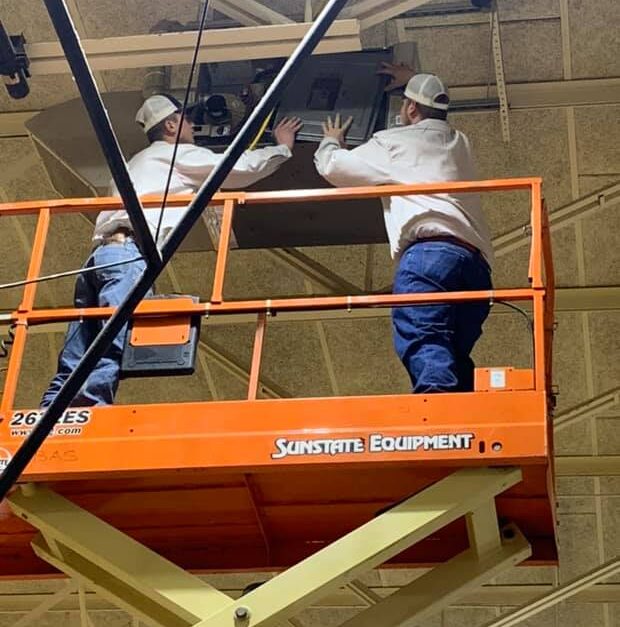
A commercial AC system is often a rooftop package unit that holds the compressor, the coils and the blower in one cabinet, and filters, belts, coils and drains are the usual checklist items.
Condensate drains on rooftops clog with debris, and the water can stain ceilings below, and replacement decisions weigh downtime as well as equipment.
Cooling at Scale – Big Buildings, Big Loads
A building with chilled water pulls its cooling from a central plant rather than separate rooftop units; air-cooled and water-cooled designs differ in how they reject heat.
Coolers, Freezers and Ice Machines: Temperature Is the Whole Job
Refrigeration equipment uses the same basic cycle as air conditioning but at much lower temperatures, and food safety rules set limits that equipment must keep.
How Climate Control A/C & Heating Goes About AC Replacement in Hoyte
The technician asks what changed, what is happening and how long it has been going on, and then the system gets inspected with gauges, meters and a careful eye.
Recommendations come with explanations, so choices rest on information rather than pressure, and the work proceeds only when the owner agrees.
Let's Talk About Your Equipment
Call 512-446-4020 to line up service or learn what to expect.
Bringing It Home – Equipment, Airflow and Air Quality
Interest in AC Replacement often starts with a problem, and the solution starts with a clear diagnosis, and Climate Control A/C & Heating answers questions at 512-446-4020.