
Looking for Heat Pumps around Corinth?
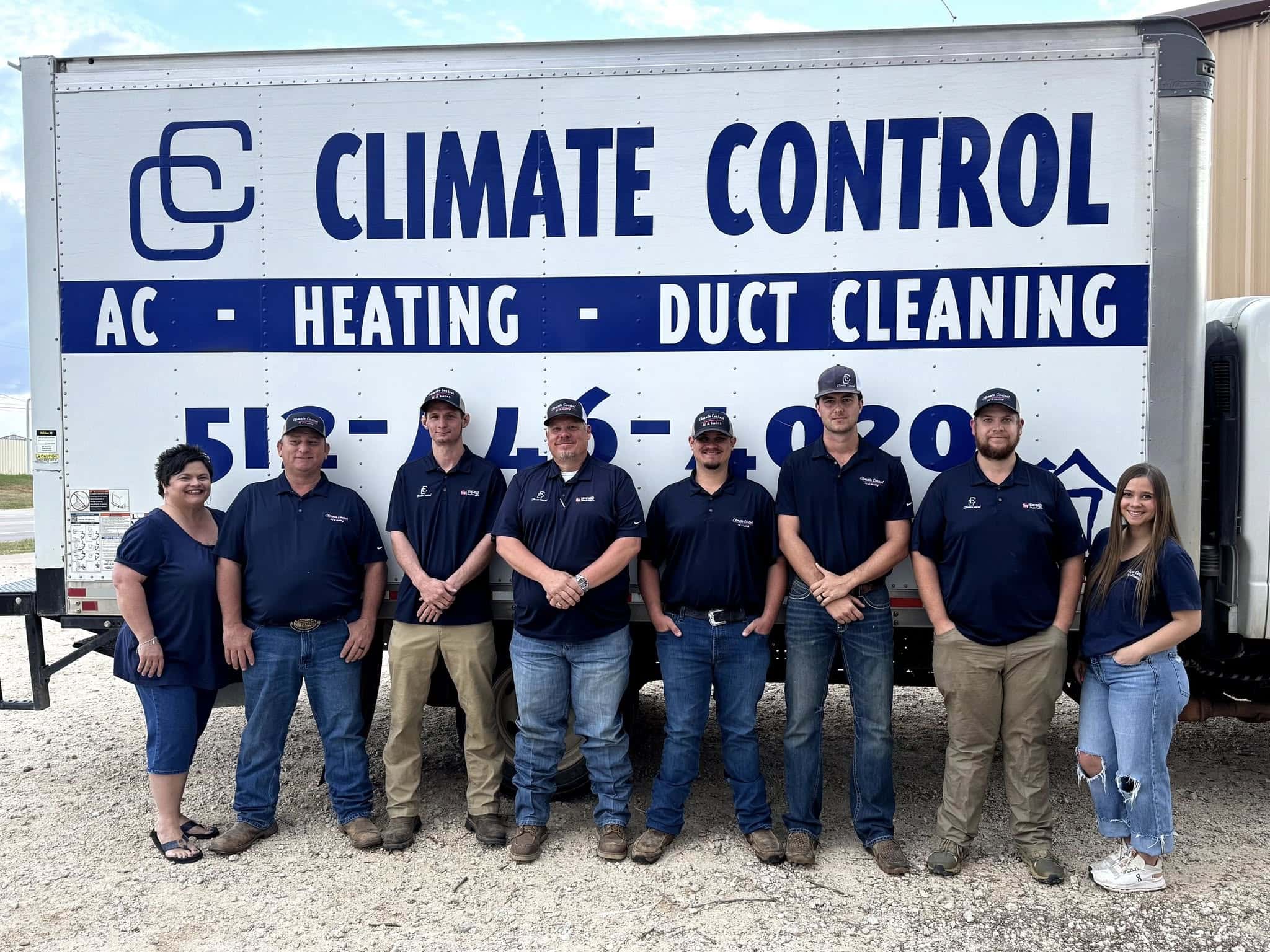
Climate Control A/C & Heating services comfort equipment of every kind around the community.
Call 512-446-4020 and tell us what you are noticing.
What Summer Asks of a System: Why Equipment Works Hard Here
Hot weather in Corinth settles in for months at a time, and a home air conditioner may run most of the day through the worst of it.
Moisture in the air matters as much as the thermometer reading, and removing it takes steady run time rather than quick bursts.
Proper equipment size, good airflow and clean surfaces separate a comfortable house from a clammy one, even before anything breaks.
Moving Heat Outdoors: a Plain Explanation
An air conditioner does not create cold; the refrigerant carries heat out of the house and leaves the cool behind.
A cold coil indoors takes in heat while the blower keeps air moving; the outdoor cabinet houses the compressor, the condenser coil and a fan.
Parts that wear out fastest are usually the small electrical ones; a failed capacitor is often a small repair rather than the end of the system.
Diagnosing a Weak Cooling System: Where the Fault Usually Hides
A thorough air conditioning repair starts with a diagnosis rather than a hunch; three very different faults can feel identical from the thermostat.
A unit that clicks and does nothing may be waiting on a bad contactor or a dead control board, and these are among the quicker repairs when the technician has the part.
Ice on the lines almost always means too little air or too little refrigerant, and the cause may be as simple as a clogged filter or as involved as a leak.
Low refrigerant means a leak, because the charge stays put when the loop is tight, which is why measuring pressures and temperatures matters more than adding gas.
Condensate has to leave the house, so a blocked line sends it somewhere less welcome; moisture removed from muggy air adds up to gallons a day.
Warning Signs – Before a Breakdown
Air conditioners seldom quit without hints along the way; the list below covers what owners tend to notice:
- Some rooms that never cool down even though the blower sounds normal.
- A burning smell from the vents, sometimes only on the hottest afternoons.
- A system that turns on and off in short cycles, even though the thermostat is satisfied.
- Water around the air handler, sometimes from a dirty coil.
Keeping Equipment Healthy: Catching Trouble Before It Grows
Regular AC maintenance trims the chance of a breakdown during the hottest week; the technician cleans what gets dirty and measures what can drift.
The air filter is the part most under the homeowner's own control, and how often it needs changing depends on the filter type, pets and the season.
The visit usually includes the condenser coil, the evaporator coil and a flush of the drain line; temperature drop and refrigerant pressures are measured to show how the loop is behaving.
When Replacement Makes Sense: How Owners Decide
An old unit that needs repair after repair may be a candidate for AC replacement; the decision belongs to the owner, who deserves the facts.
A system built around a retired refrigerant can be a poor candidate for major repairs, and that can tip a close decision toward replacement.
Efficiency has improved steadily, and a modern system can use noticeably less electricity, and comfort improves along with the numbers.
Getting an Install Right – a Calculation, Not a Guess
An air conditioning install starts with a load calculation, not a rule of thumb, which is why square footage alone is a poor guide.
Oversizing is a common mistake, and it wears out parts through constant starting, and a proper calculation avoids both extremes.
Matched components perform to their design efficiency, while mismatched ones fall short, and a startup check confirms the charge, the airflow and the temperature drop.
Ducts – Where Comfort Is Won or Lost
The duct system is as much a part of comfort as the unit that feeds it, and leaks, bad bends and poor insulation waste a large share of the effort.
Runs through an unconditioned attic or crawl space gain heat or lose chill unless sealed and wrapped, which can improve comfort without touching the equipment.
When Ducts Need Attention: Worth Doing at the Right Time
Air passages collect dust, and duct cleaning is the way to clear it from the inside, and the decision should rest on what is actually in the ducts.
A cleaning that ignores leaks and filtration is a short-term fix at best, and a plain look inside the duct tells the real story.
The Two-Way Heat Mover: a Natural Fit for Mild Winters
Heat pumps move heat in both directions, cooling in summer and heating in winter, and one system handles both seasons with a single set of equipment.
A heat pump may call on backup heat during a hard freeze or while defrosting its coil, but a heat pump that always needs the backup may have a fault.
Fuel-Fired Warmth – Parts, Safety and Service
Gas furnaces burn natural gas or propane in a burner and pass the heat through a heat exchanger, and the sequence is why furnaces need testing before cold weather.
The annual furnace check is also a safety check on combustion and exhaust, and stored items near the unit can block airflow and combustion air.
Electric Furnaces and Air Handlers: Simple Equipment, Steady Output
Electric heating systems warm the air with heating elements instead of a flame, which keeps the mechanical side straightforward.
Compared with a heat pump, strips and electric furnaces draw heavily for the heat they make; the decision rests on the building, not just the equipment.
Getting Ready for Cold Weather: Short Winters Still Bite
Heating season in this part of Texas is brief, with sudden swings between warm days and freezing nights, and a test on a mild day beats a surprise on a freezing one.
From gas furnaces to heat pumps, each heating system needs different attention before winter, and a technician adjusts the visit to the equipment on site.
Hydronic Warmth – Radiators, Coils and Radiant Floors
Radiant floor and baseboard heating both rely on a boiler to heat the water, but a building with a boiler needs service from someone who knows hydronics.
Pressure, temperature and flame quality are the numbers that matter in a boiler check; leaks near joints deserve prompt attention.
Air Quality Basics: Why It Deserves Attention
Good indoor air quality means controlling particles, humidity, fresh air and sources of contamination, and in Texas, cedar pollen and spring dust can find their way inside.
Residential air quality improves when the filter fits the system and gets changed on schedule, and sealing return leaks keeps unfiltered air from sneaking around the filter.
Businesses face their own air issues, from shared air handlers to customers coming and going all day; ventilation rules for occupied spaces set a baseline.
Filters, Purifiers and Their Limits: Matching the Tool to the Problem
Some purifiers capture particles with high-efficiency filters, and others target odors with carbon; pollen and dust call for filtration, while odors call for carbon.
Good results come from a purifier chosen to complement the rest of the system, and a conversation about the whole house usually comes first.
Light and Mist Treatments – Tools for a Damp Climate
Ultraviolet lamps near the coil are meant to keep it cleaner by discouraging growth on damp surfaces; the lamp supplements regular cleaning rather than replacing it.
An antimicrobial mist is sprayed or fogged onto surfaces inside the system or the building, and it works best where the source of moisture has been dealt with.
Bringing Outdoor Air In: Balance in a Humid Climate
Ventilating a building means replacing stale indoor air with fresh outdoor air in a controlled way; the cooling equipment has to be sized to handle the fresh air coming in.
Good attic airflow lowers the heat that leaks down into the living space, and this is another reason the whole building matters.
Keeping a Workplace Comfortable – Equipment Built for Heavier Duty
A commercial AC system is sized for heat from people, lighting and machines as well as sunshine; a break in cooling can mean lost customers or a workday cut short.
Coil cleaning, belt checks and economizer inspections are part of keeping commercial equipment dependable; planning a changeout around business hours limits disruption.
Central Plant Equipment – Big Buildings, Big Loads
A chiller is a large refrigeration machine that chills water for use in many spaces, and water treatment, tube cleaning and refrigerant checks are routine tasks.
Commercial Refrigeration: Walk-Ins, Reach-Ins and More
Refrigeration service covers walk-in coolers, reach-in units, freezers, display cases and ice machines; regular cleaning of condenser coils matters even more than in comfort cooling.
How Climate Control A/C & Heating Approaches Heat Pumps across Corinth
Every visit starts with questions about what the equipment has been doing and when; readings replace guesses, and the findings are explained in plain language.
Options are laid out clearly, with the reasons behind each recommendation, and the work proceeds only when the owner agrees.
Comfort Is a Phone Call Away
Phone 512-446-4020 to line up service or learn what to expect.
Closing Thoughts: Attention Now Saves Trouble Later
From Heat Pumps to routine upkeep, good outcomes come from understanding the equipment and caring for it, and Climate Control A/C & Heating is ready to help with it.