
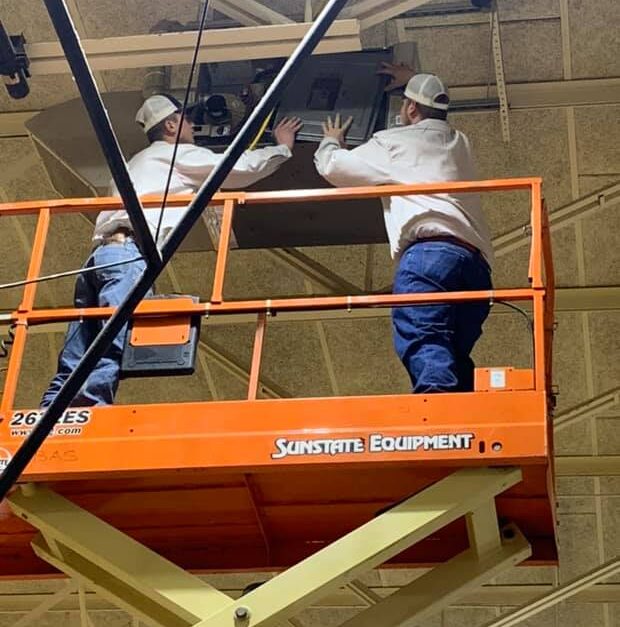
Trying to find Commercial Air Conditioning System in Gause?
Climate Control A/C & Heating services cooling, heating and the air indoors in the local area.
Call 512-446-4020 to start the conversation.
What Summer Asks of a System: Why Equipment Works Hard Here
A Gause summer stacks hot afternoon after hot afternoon; the machine on the pad outside is among the busiest appliances a household owns.
Moisture in the air matters as much as the thermometer reading, and removing it takes steady run time rather than quick bursts.
Right size, steady airflow and a clean coil explain much of how a house feels, and each one is something a technician can check on site.
Inside an Air Conditioner – Parts and Their Jobs
A central air conditioner is a heat mover, not a cold maker; it collects heat inside the house and dumps it into the outdoor air.
The air handler holds the indoor coil and the blower that pushes air across it; outdoors, a fan pulls air across the condenser coil to shed the load.
Wear tends to show up in the electrical components before the big mechanical ones; the compressor itself can last a long time when it is kept clean and properly charged.
Problems Behind a Warm House – Finding the Real Cause
AC repair that works starts with measurements, because guessing wastes time and parts, and each of those causes needs a different fix.
Electrical faults are common, with capacitors and contactors leading the list of small failures, and these are among the quicker repairs when the technician has the part.
A coil that ices over points toward airflow or refrigerant; the coil needs to thaw completely before anyone can measure what is going on.
Refrigerant is not a consumable that needs topping off every season; topping off a leaking system is a temporary patch that lets the problem return.
A blocked drain line can back water into the pan and trip a safety switch, and a flush of the line during regular service often prevents the problem.
When to Call for Service: Small Changes, Big Hints
Most breakdowns announce themselves with small changes in behavior; the list below covers what owners tend to notice:
- Rooms that stay warm despite thin airflow at the vents.
- A burning smell from the vents, particularly at the start of a cycle.
- Constant starting and stopping through the afternoon, along with a higher electric bill.
- Condensation where there should be none, sometimes from a dirty coil.
Preventive Service – Small Tasks, Long Equipment Life
AC maintenance is a set of simple, repeatable tasks that keep a cooling system efficient, with attention paid to coils, drains, belts and wiring.
Changing the filter on schedule protects the coil, the blower and the ductwork, which is a quick job that helps the entire system.
Coils, drain pans and drain lines all get attention during a complete tune-up, and reading the numbers shows whether anything is drifting out of range.
Aging Equipment: How Owners Decide
The conversation about replacement starts when age, condition and comfort all point the same way, and an honest technician explains both paths.
The refrigerant a system uses is worth asking about when a repair involves the sealed loop; current equipment follows the refrigerant rules in force today.
Today's units move the same heat with less power than equipment from a generation ago; replacement can pay back in comfort as well as in energy use.
Matching a System to a House: Where Good Results Begin
Air conditioning install quality depends on matching capacity to what the building actually needs; windows, attic insulation and ductwork all change the answer.
An oversized system cools the air quickly and then shuts off before it removes moisture; careful sizing protects comfort and the equipment.
Matched components perform to their design efficiency, while mismatched ones fall short; the owner then gets a walk-through of the thermostat and the filter.
Air Distribution – What Hides Above the Ceiling
Duct work moves the air that the equipment has cooled or heated, so its design shapes every room, and leaks, bad bends and poor insulation waste a large share of the effort.
A long flexible run through a hot attic needs support, sealing and good insulation, and sealing with mastic rather than cloth tape holds up better in the heat.
When Ducts Need Attention – Reasons and Limits
A duct cleaning visit reaches the trunk lines, the branches and the grilles; a house with no such history may not need it often.
Cleaning pays off only when the source of the dirt is also addressed, and a plain look inside the duct tells the real story.
Heat Pumps – Efficient Most of the Year
Heat pumps use the same refrigerant loop as an air conditioner, with a reversing valve added; in Texas, cold snaps are short, so a heat pump covers most of the heating season.
Defrost cycles and backup heat are normal parts of winter operation, but a heat pump that always needs the backup may have a fault.
Fuel-Fired Warmth – the Machinery in the Closet
The sequence in a gas furnace runs from thermostat call to draft fan, igniter, gas valve and flame proof, and a dirty flame sensor is a frequent reason for a furnace that lights and then shuts off.
The annual furnace check is also a safety check on combustion and exhaust, and the furnace check is well timed before the first cold front arrives.
All-Electric Warmth: What to Expect From It
An electric furnace passes air over banks of resistance elements that glow when energized, and the main wear items are the elements, the sequencers and the blower.
The trade-off with electric heat is simple equipment against higher running use, and many homes pair a heat pump with strips as a backup.
Heating Systems of Every Type: What to Do Before the First Freeze
The heating season is short enough that equipment sits unused for months, then must work on the first cold night; running the heater briefly in fall shows whether it lights, blows warm air and shuts off properly.
Furnaces, heat pumps and electric air handlers all heat homes, and each has its own checkup list, and a technician adjusts the visit to the equipment on site.
Hot-Water Heating: Found in Older and Larger Buildings
Radiant floor and baseboard heating both rely on a boiler to heat the water, and they are less common in Texas than furnaces and heat pumps.
A boiler tune-up checks combustion, water level, pressure and the controls that keep it safe; leaks near joints deserve prompt attention.
What You Breathe at Home – Sources, Symptoms and Solutions
Good indoor air quality means controlling particles, humidity, fresh air and sources of contamination, which makes the HVAC system the natural place to improve air quality.
Choosing a filter means balancing how much it removes against how much resistance it adds; humidity control prevents the conditions mold needs.
Commercial air quality involves larger volumes, more occupants and strict airflow requirements, and employee and customer comfort both depend on it.
Filters, Purifiers and Their Limits: What the Labels Mean
Some purifiers capture particles with high-efficiency filters, and others target odors with carbon, and ozone-producing models are better avoided in occupied rooms.
Good results come from a purifier chosen to complement the rest of the system; a technician looks at the system before recommending a device.
Managing Growth Inside the System: Understanding the Options
UV lights install in the air handler and shine on the indoor coil and drain pan to limit microbial growth; ask what the lamp targets and how often it needs service.
Fogging a space with antimicrobial mist is a surface treatment, not a cure for a moisture problem; the underlying cause still has to be fixed.
Bringing Outdoor Air In – Not Too Much, Not Too Little
Ventilating a building means replacing stale indoor air with fresh outdoor air in a controlled way, which is where design and service make a real difference.
Attic ventilation is a separate matter, but it affects how hard the cooling system works; improvements can start with simple, low-effort fixes.
Commercial Cooling: Comfort That Supports the Work
A commercial AC system is sized for heat from people, lighting and machines as well as sunshine; a break in cooling can mean lost customers or a workday cut short.
Condensate drains on rooftops clog with debris, and the water can stain ceilings below, and a technician can map out options on site.
Chiller Systems for Larger Buildings: Where They Make Sense
Instead of cooling air directly, chiller systems cool a water loop that serves coils across the property, and they need specialized service knowledge.
Commercial Refrigeration – Why Failures Matter Fast
Refrigeration service covers walk-in coolers, reach-in units, freezers, display cases and ice machines, and food safety rules set limits that equipment must keep.
How Climate Control A/C & Heating Works Through Commercial Air Conditioning System throughout Gause
The technician asks what changed, what is happening and how long it has been going on, followed by an explanation of what was found and what the choices are.
Recommendations come with explanations, so choices rest on information rather than pressure, and the work proceeds only when the owner agrees.
Let's Talk About Your Equipment
Call 512-446-4020 to describe what is going on and find the next step.
Closing Thoughts – Equipment, Airflow and Air Quality
Whether the need falls under Commercial Air Conditioning System or elsewhere in the heating, cooling and air quality family, the same principles apply; Climate Control A/C & Heating can walk through the choices with you.