
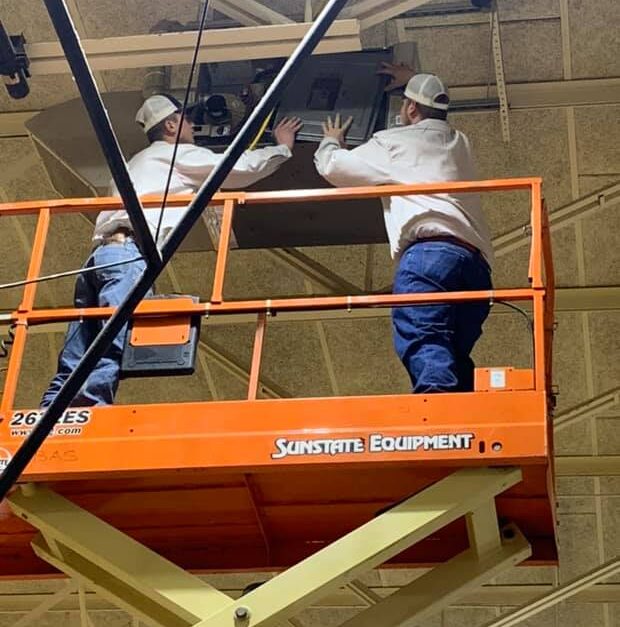
Shopping around for Air Conditioning across Buckholts?
Climate Control A/C & Heating services climate equipment for homes and businesses in the surrounding towns.
Call 512-446-4020 and ask a real question.
Heat and Humidity: Why Equipment Works Hard Here
The cooling season in Buckholts starts early and finishes late, and a home air conditioner may run most of the day through the worst of it.
Humidity is half of the comfort problem, not an afterthought, and the coil is where the moisture condenses and drains away.
Capacity, airflow and cleanliness work together, and a weakness in one shows up as a house that never feels quite right, whatever the label on the box promises.
Moving Heat Outdoors – Parts and Their Jobs
Air conditioning is the business of relocating heat; the refrigerant carries heat out of the house and leaves the cool behind.
Warm indoor air passes over a cold coil in the air handler or furnace cabinet, and the outdoor unit holds the compressor and condenser coil that push that heat away.
Wear tends to show up in the electrical components before the big mechanical ones; the compressor itself can last a long time when it is kept clean and properly charged.
Diagnosing a Weak Cooling System: a Look at Common Failures
A proper air conditioning repair sorts the symptom from the cause before anything is replaced, and a house that is warm may have an electrical fault, an airflow problem or a refrigerant problem.
When the outdoor fan hums but will not spin, a capacitor is often the reason, and each can be tested with a meter in a few minutes.
Ice on the lines almost always means too little air or too little refrigerant, and running the system while it is frozen can damage the compressor.
Refrigerant is not a consumable that needs topping off every season, which is why measuring pressures and temperatures matters more than adding gas.
Clogged condensate drains are a quiet cause of water stains and shutdowns, and a flush of the line during regular service often prevents the problem.
Warning Signs: Small Changes, Big Hints
Most breakdowns announce themselves with small changes in behavior, and the items below are easy to check from inside the house:
- Supply air that feels weak or lukewarm despite thin airflow at the vents.
- A burning smell from the vents, sometimes only on the hottest afternoons.
- Repeated short runs that never finish a cooling cycle, along with a higher electric bill.
- Pooling water under the furnace or air handler, especially in humid weather.
Tune-Ups for Cooling Gear: What a Maintenance Visit Covers
Scheduled air conditioning maintenance gives a technician a look at the system while it still works; the checklist stays short enough to repeat every season.
Changing the filter on schedule protects the coil, the blower and the ductwork; the label on the filter and the look of its surface are a reliable guide.
Dirt on the condenser makes the compressor run hotter, so that coil gets cleaned too; temperature drop and refrigerant pressures are measured to show how the loop is behaving.
Repair or Replace – a Decision Worth Making Carefully
The conversation about replacement starts when age, condition and comfort all point the same way; the right answer differs from one house to the next.
Some older units run on refrigerant that is now scarce, which affects repair decisions, which is another reason to get a clear diagnosis before deciding.
Variable-speed designs hold temperature and humidity more precisely than single-stage units, and comfort improves along with the numbers.
Choosing Capacity – Bigger Is Not Better
Air conditioning install quality depends on matching capacity to what the building actually needs, which is why square footage alone is a poor guide.
A unit that is too large satisfies the thermostat fast and leaves the humidity behind, and a proper calculation avoids both extremes.
Every connection, from the refrigerant lines to the thermostat wire, gets sized and routed with care, and the installer verifies airflow and charge before leaving the job.
Air Distribution – What Hides Above the Ceiling
In many houses, the ducts decide whether a new system performs as promised, which is why the airflow measurement is part of a proper diagnosis.
Attic duct work in Texas sees extreme heat, so insulation and tight seams earn their keep, and a technician can often find the leaks with a pressure test.
Cleaning the Air Paths – Reasons and Limits
Duct cleaning removes dust and debris from the supply and return runs, the registers and the blower compartment, and the decision should rest on what is actually in the ducts.
Clean ducts work best alongside a good filter and sealed connections; ask to see before-and-after photos of the work.
Heat Pumps – Why They Suit the Region
A heat pump is an air conditioner that can run backward to warm the house, and one system handles both seasons with a single set of equipment.
When outdoor temperatures fall far enough, electric strips or a furnace add the missing warmth; watch for unusually high bills as a hint.
Gas Furnaces: How a Furnace Heats a House
Gas furnaces rely on an igniter, a flame sensor and a gas valve working in sequence; a cracked heat exchanger is a safety issue that calls for a prompt professional look.
Combustion appliances produce carbon monoxide, which is why detectors and clear vents matter, and the furnace check is well timed before the first cold front arrives.
Electric Furnaces and Air Handlers – Where It Fits Best
Electric heating systems warm the air with heating elements instead of a flame, and the main wear items are the elements, the sequencers and the blower.
Homes with strip heat often see bigger winter bills than homes with efficient heat pumps, particularly where cold stretches are brief.
Heating Systems of Every Type: Short Winters Still Bite
Winters in Texas are short, but cold fronts can drop temperatures sharply in a matter of hours; running the heater briefly in fall shows whether it lights, blows warm air and shuts off properly.
From gas furnaces to heat pumps, each heating system needs different attention before winter, and a technician adjusts the visit to the equipment on site.
Hot-Water Heating: How Hydronic Systems Differ
Boiler systems heat water or make steam and send it through pipes to radiators, baseboards or in-floor loops, but a building with a boiler needs service from someone who knows hydronics.
A boiler tune-up checks combustion, water level, pressure and the controls that keep it safe; neglected boilers corrode inside, so water quality and venting matter.
Cleaner Air Indoors – the Part You Cannot See
Good indoor air quality means controlling particles, humidity, fresh air and sources of contamination; the equipment that moves air is also the equipment that carries the contaminants.
MERV numbers describe how fine a filter catches, and the right one balances capture with airflow, and a technician can recommend what the equipment can handle.
Larger buildings circulate air through central equipment, so one fault can reach every room, and employee and customer comfort both depend on it.
Choosing an Air Cleaner – Useful, With Realistic Goals
Purifiers vary widely, from simple filters to units combining filtration, carbon and other methods; any claims about performance should be checked against the specification.
Buying a purifier without fixing a moisture problem treats a symptom and misses the cause, which is why one device rarely fits every home.
Light and Mist Treatments: Where They Fit
UV lights install in the air handler and shine on the indoor coil and drain pan to limit microbial growth; ask what the lamp targets and how often it needs service.
Mist treatments use an approved solution applied by a technician in a controlled way; the product and method should be explained in advance.
Bringing Outdoor Air In: Why Tight Buildings Need It
Bath fans, kitchen hoods and outdoor air intakes are all part of ventilating a modern building, which is where design and service make a real difference.
A hot attic loads up the ceiling and the ducts, so attic ventilation and insulation help the system; improvements can start with simple, low-effort fixes.
Business Climate Control – Equipment Built for Heavier Duty
A commercial AC system is often a rooftop package unit that holds the compressor, the coils and the blower in one cabinet; planned maintenance keeps surprises to a minimum.
Control settings, schedules and thermostats on commercial systems deserve a look when comfort complaints begin, and larger properties may phase work across several units.
Chiller Systems for Larger Buildings: Where They Make Sense
Instead of cooling air directly, chiller systems cool a water loop that serves coils across the property, and water treatment, tube cleaning and refrigerant checks are routine tasks.
Refrigeration Service – Why Failures Matter Fast
Walk-in coolers rely on evaporators, condensing units, defrost systems and door seals working together, and temperature drift is the warning sign to act on.
How Climate Control A/C & Heating Goes About Air Conditioning throughout Buckholts
Conversation comes first, because the owner knows the symptoms better than anyone, followed by an explanation of what was found and what the choices are.
Recommendations come with explanations, so choices rest on information rather than pressure; good service depends on trust running both ways.
Start With a Conversation
Dial 512-446-4020 to line up service or learn what to expect.
What to Remember – Keep Things Simple
Whether the need falls under Air Conditioning or elsewhere in the heating, cooling and air quality family, the same principles apply, and Climate Control A/C & Heating is ready to help with it.