
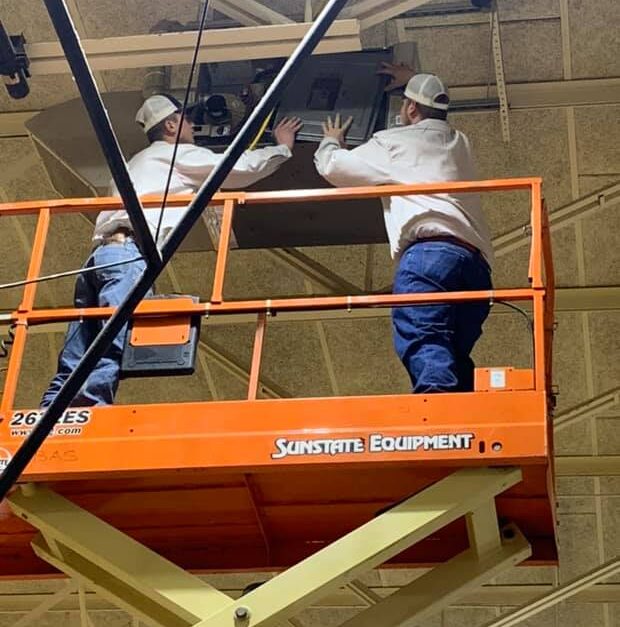
Trying to find Air Conditioning Install near Buckholts?
Climate Control A/C & Heating works on comfort equipment of every kind around the community.
Call 512-446-4020 and tell us what you are noticing.
The Cooling Season: Why Equipment Works Hard Here
A Buckholts summer stacks hot afternoon after hot afternoon, which means a cooling unit seldom rests between spring and fall.
Damp air changes how a house feels at any given temperature, and removing it takes steady run time rather than quick bursts.
Capacity, airflow and cleanliness work together, and a weakness in one shows up as a house that never feels quite right, even before anything breaks.
Anatomy of a Cooling System – Parts and Their Jobs
Air conditioning is the business of relocating heat; a sealed loop of refrigerant absorbs heat at one point and releases it at another.
Warm indoor air passes over a cold coil in the air handler or furnace cabinet, with the compressor outside squeezing the refrigerant so the heat can leave.
Starting and stopping thousands of times a season is hard on switches and capacitors; the compressor itself can last a long time when it is kept clean and properly charged.
Diagnosing a Weak Cooling System: Where the Fault Usually Hides
Air conditioning repair begins with finding out why the system quit, not with swapping parts, and a house that is warm may have an electrical fault, an airflow problem or a refrigerant problem.
Electrical faults are common, with capacitors and contactors leading the list of small failures, and they usually repair cleanly because the parts are small.
Ice building up near the air handler tells a technician where to look; shutting the cooling off is the safest response until someone inspects it.
Refrigerant is not a consumable that needs topping off every season; topping off a leaking system is a temporary patch that lets the problem return.
A blocked drain line can back water into the pan and trip a safety switch, and the fix is usually quick once the blockage is found.
Warning Signs: Trust Your Senses
Cooling equipment usually gives notice before it fails outright, and the items below are easy to check from inside the house:
- One end of the house that feels warmer while the system runs nonstop.
- A hissing noise near the refrigerant lines, particularly at the start of a cycle.
- Constant starting and stopping through the afternoon; parts wear faster.
- Water around the air handler, which deserves a look before damage spreads.
Tune-Ups for Cooling Gear: Catching Trouble Before It Grows
Air conditioning maintenance keeps dust, grime and wear from piling up unseen, with attention paid to coils, drains, belts and wiring.
The air filter is the part most under the homeowner's own control, and how often it needs changing depends on the filter type, pets and the season.
Coils, drain pans and drain lines all get attention during a complete tune-up, and reading the numbers shows whether anything is drifting out of range.
Repair or Replace – Age, Condition and Efficiency
Replacement is worth considering once repairs pile up on equipment that was already aging, and a good evaluation lays out repair and replacement side by side.
Some older units run on refrigerant that is now scarce, which affects repair decisions, which is another reason to get a clear diagnosis before deciding.
Today's units move the same heat with less power than equipment from a generation ago; replacement can pay back in comfort as well as in energy use.
Planning a New Installation: Where Good Results Begin
AC install work succeeds or fails on sizing and airflow before any equipment is delivered; orientation and shading matter as much as floor area.
An oversized system cools the air quickly and then shuts off before it removes moisture, and a unit that is too small runs constantly without catching up.
A complete installation pairs the condenser, the coil and the air handler as one system, and a startup check confirms the charge, the airflow and the temperature drop.
Air Distribution: Moving Air Efficiently
Good duct work delivers the right amount of air to each room and brings it back again; undersized trunks, kinked runs and open seams all choke the flow.
A long flexible run through a hot attic needs support, sealing and good insulation, which can improve comfort without touching the equipment.
When Ducts Need Attention: Worth Doing at the Right Time
Duct cleaning removes dust and debris from the supply and return runs, the registers and the blower compartment; construction dust, rodents or visible mold growth are the usual reasons to schedule it.
Cleaning pays off only when the source of the dirt is also addressed, and be cautious of anyone who promises that cleaning will cure every problem.
Heat Pumps – Efficient Most of the Year
A heat pump is an air conditioner that can run backward to warm the house, which suits places where freezing weather is brief.
Auxiliary heat strips back up the heat pump on the coldest mornings, and a technician can check whether the strips are running more than they should.
Burners, Igniters and Flues: What Owners Should Know
Gas furnaces rely on an igniter, a flame sensor and a gas valve working in sequence, and the sequence is why furnaces need testing before cold weather.
Safe furnace operation depends on clear venting and working carbon monoxide alarms, and stored items near the unit can block airflow and combustion air.
Electric Furnaces and Air Handlers: What to Expect From It
Electric heating systems warm the air with heating elements instead of a flame; the electrical safety devices do the most important work.
Homes with strip heat often see bigger winter bills than homes with efficient heat pumps, and many homes pair a heat pump with strips as a backup.
Warmth When the Front Arrives: Planning for Sudden Cold
A norther can send temperatures tumbling, and heating systems that sat idle all summer must start right up; running the heater briefly in fall shows whether it lights, blows warm air and shuts off properly.
Heating systems come in several forms, and the same house may use gas furnaces, heat pumps or electric heating systems, and the safety controls get tested along with the comfort ones.
Boiler Systems: Less Common, Still Important
Radiant floor and baseboard heating both rely on a boiler to heat the water, and the parts, from circulators to expansion tanks, differ from forced-air equipment.
Air in the lines, a stuck valve or a weak pump are common reasons a boiler heats unevenly, and annual attention keeps these systems running quietly.
The Air Inside Your Walls – Sources, Symptoms and Solutions
The air in a house mixes outdoor pollen, indoor dust and chemicals from everyday products, and in Texas, cedar pollen and spring dust can find their way inside.
Choosing a filter means balancing how much it removes against how much resistance it adds; the system and the filter are chosen together.
Larger buildings circulate air through central equipment, so one fault can reach every room, which is why commercial properties usually benefit from regular service visits.
Choosing an Air Cleaner – Whole-Home or Single Room
Air purifiers range from a stand-alone machine in one room to a unit tied into the ductwork; pollen and dust call for filtration, while odors call for carbon.
Buying a purifier without fixing a moisture problem treats a symptom and misses the cause; the goal is a measurable improvement, not a gadget.
Keeping Coils Clean Between Visits: What They Do and What They Do Not
A UV lamp does not clean the air passing by, but it treats the surfaces it can see; ask what the lamp targets and how often it needs service.
Mist treatments use an approved solution applied by a technician in a controlled way, and it works best where the source of moisture has been dealt with.
Bringing Outdoor Air In: the Case for Planned Airflow
Planned ventilation brings in measured amounts of outdoor air and exhausts the stale air; the cooling equipment has to be sized to handle the fresh air coming in.
Ductwork that dumps moisture into an attic can create damage far from the source, and the same attention applies to the whole building.
Commercial Cooling: Comfort That Supports the Work
A commercial AC system is sized for heat from people, lighting and machines as well as sunshine, which is why many businesses plan service around their schedule.
Coil cleaning, belt checks and economizer inspections are part of keeping commercial equipment dependable, and replacement decisions weigh downtime as well as equipment.
Chiller Systems for Larger Buildings: Where They Make Sense
Instead of cooling air directly, chiller systems cool a water loop that serves coils across the property, and the plant includes a chiller, pumps, a cooling tower or air-cooled condenser, and controls.
Refrigeration Service – Equipment With Little Room for Error
Refrigeration service covers walk-in coolers, reach-in units, freezers, display cases and ice machines, and temperature drift is the warning sign to act on.
How Climate Control A/C & Heating Works Through Air Conditioning Install throughout Buckholts
A good service call begins with listening to what the owner has noticed; readings replace guesses, and the findings are explained in plain language.
Recommendations come with explanations, so choices rest on information rather than pressure, and the work proceeds only when the owner agrees.
Comfort Is a Phone Call Away
Reach out at 512-446-4020 to line up service or learn what to expect.
Putting It Together: Small Habits, Big Difference
Equipment, ducts and air quality are connected, so a question about Air Conditioning Install is rarely a stand-alone one; Climate Control A/C & Heating can walk through the choices with you.