
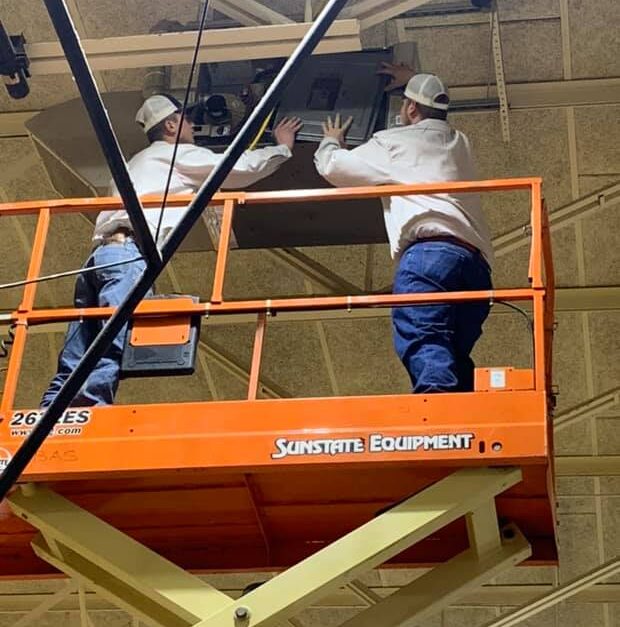
Looking for AC Repair throughout Milam County?
Climate Control A/C & Heating services climate equipment for homes and businesses around the community.
Call 512-446-4020 to start the conversation.
What Summer Asks of a System: Why Equipment Works Hard Here
The cooling season in Milam County starts early and finishes late; a cooling system here logs far more running hours than one in a mild climate.
Damp air changes how a house feels at any given temperature, and the coil is where the moisture condenses and drains away.
Proper equipment size, good airflow and clean surfaces separate a comfortable house from a clammy one, regardless of which brand is on the cabinet.
Anatomy of a Cooling System – Parts and Their Jobs
An air conditioner does not create cold; a sealed loop of refrigerant absorbs heat at one point and releases it at another.
A cold coil indoors takes in heat while the blower keeps air moving; outdoors, a fan pulls air across the condenser coil to shed the load.
Wear tends to show up in the electrical components before the big mechanical ones; a failed capacitor is often a small repair rather than the end of the system.
Diagnosing a Weak Cooling System – Sorting Symptoms From Causes
Air conditioning repair begins with finding out why the system quit, not with swapping parts; weak cooling is a symptom that many separate faults share.
Electrical faults are common, with capacitors and contactors leading the list of small failures, and each can be tested with a meter in a few minutes.
A frozen evaporator coil blocks the very air it is supposed to cool; switching the system off and letting it thaw protects the equipment until it can be checked.
A properly working system keeps its charge for good, since nothing burns it off; a responsible repair locates the leak instead of simply adding more.
A blocked drain line can back water into the pan and trip a safety switch, and clearing the line is routine maintenance work.
When to Call for Service: Trust Your Senses
Cooling equipment usually gives notice before it fails outright, and the items below are easy to check from inside the house:
- One end of the house that feels warmer even with the thermostat set low.
- Grinding, squealing or rattling from the outdoor cabinet, particularly at the start of a cycle.
- Constant starting and stopping through the afternoon, with indoor humidity climbing.
- Condensation where there should be none, especially in humid weather.
Tune-Ups for Cooling Gear: Catching Trouble Before It Grows
Regular AC maintenance trims the chance of a breakdown during the hottest week, and the work centers on airflow, cleanliness and electrical health.
Changing the filter on schedule protects the coil, the blower and the ductwork, and how often it needs changing depends on the filter type, pets and the season.
Dirt on the condenser makes the compressor run hotter, so that coil gets cleaned too; the report reflects measurements rather than guesses.
Time for a Change – Age, Condition and Efficiency
The conversation about replacement starts when age, condition and comfort all point the same way, and an honest technician explains both paths.
A system built around a retired refrigerant can be a poor candidate for major repairs; current equipment follows the refrigerant rules in force today.
Variable-speed designs hold temperature and humidity more precisely than single-stage units, which matters most where the system runs for months.
Getting an Install Right: Where Good Results Begin
Air conditioning install quality depends on matching capacity to what the building actually needs, which is why square footage alone is a poor guide.
Too much capacity leads to short cycling, uneven rooms and a clammy feel; the right size runs long, steady cycles that dry the air.
Every connection, from the refrigerant lines to the thermostat wire, gets sized and routed with care, and local permit and inspection rules apply in most towns.
The Hidden Network in the Walls and Attic: the Lungs of the House
In many houses, the ducts decide whether a new system performs as promised; a house with comfort problems deserves a look at its air paths.
Leaks at joints pull attic air into the system and push cooled air out into the rafters, and sealing with mastic rather than cloth tape holds up better in the heat.
Dust, Debris and Ductwork – Deciding if It Fits
Duct cleaning removes dust and debris from the supply and return runs, the registers and the blower compartment; construction dust, rodents or visible mold growth are the usual reasons to schedule it.
A cleaning that ignores leaks and filtration is a short-term fix at best, and be cautious of anyone who promises that cleaning will cure every problem.
Heat Pumps – Why They Suit the Region
Heat pumps move heat in both directions, cooling in summer and heating in winter, which suits places where freezing weather is brief.
A heat pump may call on backup heat during a hard freeze or while defrosting its coil, but a heat pump that always needs the backup may have a fault.
Heating With Gas – Parts, Safety and Service
Inside a gas furnace, a burner lights, a heat exchanger warms up and the blower pushes air across it, and the sequence is why furnaces need testing before cold weather.
Safe furnace operation depends on clear venting and working carbon monoxide alarms; never ignore an alarm or a smell of gas.
Electric Furnaces and Air Handlers: What to Expect From It
Electric heat uses sequenced elements, relays and limit switches to warm the house; the electrical safety devices do the most important work.
Homes with strip heat often see bigger winter bills than homes with efficient heat pumps, and a technician can explain how each option behaves in a mild climate.
Heating Systems of Every Type: What to Do Before the First Freeze
The heating season is short enough that equipment sits unused for months, then must work on the first cold night, and a test on a mild day beats a surprise on a freezing one.
Furnaces, heat pumps and electric air handlers all heat homes, and each has its own checkup list, and the safety controls get tested along with the comfort ones.
Boiler Systems: Less Common, Still Important
A boiler warms water in a closed loop, and pumps circulate it to the rooms, and the parts, from circulators to expansion tanks, differ from forced-air equipment.
Pressure, temperature and flame quality are the numbers that matter in a boiler check, and bleeding air from the loops is a routine task.
Indoor Air Quality – Sources, Symptoms and Solutions
The air in a house mixes outdoor pollen, indoor dust and chemicals from everyday products, and in Texas, cedar pollen and spring dust can find their way inside.
Residential air quality improves when the filter fits the system and gets changed on schedule; the system and the filter are chosen together.
Commercial air quality depends on ventilation rates, filtration and the upkeep of rooftop equipment; scheduled filter changes and coil cleaning keep these systems honest.
Filters, Purifiers and Their Limits: Sorting Fact From Marketing
Purifiers remove particles or gases from the air, and they come as whole-home units or portable room models; a device that makes bold promises deserves a second look.
Equipment that cleans the air cannot make up for a dirty coil or a leaky return, and sizing matters here as much as anywhere.
Add-On Air Treatments – Tools for a Damp Climate
Lamps inside the cabinet work on the coil and pan, and they need replacing on a schedule; bulbs lose strength over time and need changing.
Mist treatments use an approved solution applied by a technician in a controlled way, and it works best where the source of moisture has been dealt with.
Ventilating: Why Tight Buildings Need It
Ventilating also removes moisture from kitchens and baths before it settles into the structure, and in a humid climate the incoming air needs dehumidifying.
Good attic airflow lowers the heat that leaks down into the living space; improvements can start with simple, low-effort fixes.
Business Climate Control: Uptime Matters
A commercial AC system is often a rooftop package unit that holds the compressor, the coils and the blower in one cabinet; planned maintenance keeps surprises to a minimum.
Rooftop units sit in the sun and wind, so the cabinets, the coils and the curbs take a beating; a clear plan helps the business stay open.
Central Plant Equipment – Water Carries the Cold
Instead of cooling air directly, chiller systems cool a water loop that serves coils across the property, and water treatment, tube cleaning and refrigerant checks are routine tasks.
Keeping Food and Product Cold: Walk-Ins, Reach-Ins and More
A refrigeration problem is often found in the condenser, the defrost control or a worn door gasket, and food safety rules set limits that equipment must keep.
How Climate Control A/C & Heating Goes About AC Repair around Milam County
Conversation comes first, because the owner knows the symptoms better than anyone; readings replace guesses, and the findings are explained in plain language.
Recommendations come with explanations, so choices rest on information rather than pressure; nothing starts without a clear understanding.
Start With a Conversation
Reach out at 512-446-4020 to describe what is going on and find the next step.
Bringing It Home: Comfort Is a System
From AC Repair to routine upkeep, good outcomes come from understanding the equipment and caring for it; Climate Control A/C & Heating can walk through the choices with you.