
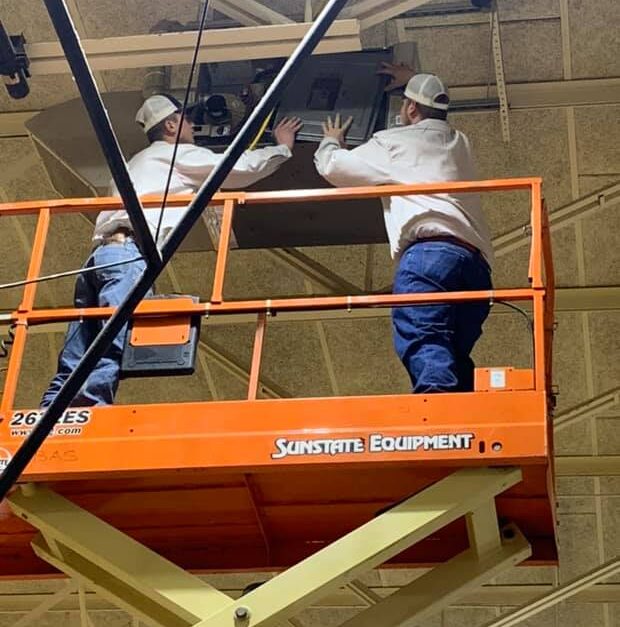
In need of Air Conditioning Install across Milano?
Climate Control A/C & Heating works on the equipment that keeps buildings comfortable close to home.
Dial 512-446-4020 and ask a real question.
What Summer Asks of a System – Built for a Long Haul
The cooling season in Milano starts early and finishes late, which means a cooling unit seldom rests between spring and fall.
Water vapor rides along with the heat on a muggy afternoon, and removing it takes steady run time rather than quick bursts.
Right size, steady airflow and a clean coil explain much of how a house feels, whatever the label on the box promises.
Moving Heat Outdoors: What Each Piece Does
An air conditioner does not create cold; warmth is absorbed in one coil and released in another.
A cold coil indoors takes in heat while the blower keeps air moving; the outdoor cabinet houses the compressor, the condenser coil and a fan.
The contactor, the capacitor and the motors take a beating in hot weather; a failed capacitor is often a small repair rather than the end of the system.
Diagnosing a Weak Cooling System – Finding the Real Cause
Air conditioning repair begins with finding out why the system quit, not with swapping parts; three very different faults can feel identical from the thermostat.
Electrical faults are common, with capacitors and contactors leading the list of small failures; the diagnosis comes before any decision about a bigger job.
A frozen evaporator coil blocks the very air it is supposed to cool; switching the system off and letting it thaw protects the equipment until it can be checked.
The charge in a cooling system is fixed, so a shortage points to escape; topping off a leaking system is a temporary patch that lets the problem return.
A blocked drain line can back water into the pan and trip a safety switch, though a stopped system after heavy use is a good moment to check it.
Clues Your System Is Struggling – What Owners Notice First
The system tends to behave differently well before the day it stops, and the following signs are worth acting on:
- Uneven temperatures from room to room even with the thermostat set low.
- Loud banging when the compressor starts, particularly at the start of a cycle.
- Repeated short runs that never finish a cooling cycle, even though the thermostat is satisfied.
- Condensation where there should be none, particularly after long runs.
Regular Maintenance – Small Tasks, Long Equipment Life
Air conditioning maintenance keeps dust, grime and wear from piling up unseen; the technician cleans what gets dirty and measures what can drift.
Changing the filter on schedule protects the coil, the blower and the ductwork, and how often it needs changing depends on the filter type, pets and the season.
Dirt on the condenser makes the compressor run hotter, so that coil gets cleaned too; tightening electrical connections is a standard part of the job.
Deciding on a New System – Age, Condition and Efficiency
AC replacement becomes a real question when a system is old, repeatedly broken or hard to keep comfortable; the decision belongs to the owner, who deserves the facts.
Refrigerant types have changed over time, so older systems may use one that is hard to find, and newer equipment is built for current refrigerants.
Efficiency numbers on new equipment, such as SEER2, give a way to compare models fairly, and in a long cooling season those savings add up.
Choosing Capacity: Details That Shape Comfort
Air conditioning install quality depends on matching capacity to what the building actually needs, which is why square footage alone is a poor guide.
An oversized system cools the air quickly and then shuts off before it removes moisture; the right size runs long, steady cycles that dry the air.
A complete installation pairs the condenser, the coil and the air handler as one system, and the installer verifies airflow and charge before leaving the job.
Duct System Basics: Moving Air Efficiently
Duct work moves the air that the equipment has cooled or heated, so its design shapes every room; a house with comfort problems deserves a look at its air paths.
A long flexible run through a hot attic needs support, sealing and good insulation, and sealing with mastic rather than cloth tape holds up better in the heat.
When Ducts Need Attention: Worth Doing at the Right Time
Duct cleaning is a mechanical job that brushes loose and vacuums out what has collected, and the decision should rest on what is actually in the ducts.
Clean ducts work best alongside a good filter and sealed connections, and a careful provider will show the owner what was found inside.
Reversible Systems – Efficient Most of the Year
Instead of burning fuel, heat pumps pull warmth from outdoor air and carry it inside, and one system handles both seasons with a single set of equipment.
Defrost cycles and backup heat are normal parts of winter operation, and a technician can check whether the strips are running more than they should.
Gas Furnaces: How a Furnace Heats a House
Gas furnaces burn natural gas or propane in a burner and pass the heat through a heat exchanger, and a fault in any one step can stop the whole cycle.
Carbon monoxide detectors belong in any home with fuel-burning equipment, and homeowners should keep the area around the furnace clear of clutter.
Heating With Electricity: How the Elements Work
Electric heat uses sequenced elements, relays and limit switches to warm the house, and the equipment is simple, with few moving parts.
Electricity makes heat at a steady rate, but resistance heat uses more power than a heat pump does for the same warmth; the choice depends on what fuel is available at the property.
Heating Systems of Every Type – Reliable Heat on Demand
The heating season is short enough that equipment sits unused for months, then must work on the first cold night, which is why heating services are well scheduled in fall.
Furnaces, heat pumps and electric air handlers all heat homes, and each has its own checkup list, which keeps the work simple to explain and easy to follow.
Heating With Water: How Hydronic Systems Differ
Boiler systems appear in older buildings, larger properties and some commercial spaces; the region mostly uses forced air, so boilers are the exception.
Air in the lines, a stuck valve or a weak pump are common reasons a boiler heats unevenly, and annual attention keeps these systems running quietly.
Cleaner Air Indoors: Beyond Temperature and Humidity
Good indoor air quality means controlling particles, humidity, fresh air and sources of contamination, and cleaner air depends on filtration, ventilation and moisture control working together.
Filter grade matters, but a very dense filter in the wrong system can choke the airflow; a deeper media cabinet gives better filtering with less restriction.
Businesses face their own air issues, from shared air handlers to customers coming and going all day, and employee and customer comfort both depend on it.
Air Purification Options: What the Labels Mean
Whole-home purifiers treat air as it passes through the system, while portable ones clean a single space, and ozone-producing models are better avoided in occupied rooms.
A purifier works alongside good ventilation and a clean system, not in place of them, and a conversation about the whole house usually comes first.
Managing Growth Inside the System: Where They Fit
Ultraviolet lamps near the coil are meant to keep it cleaner by discouraging growth on damp surfaces; the lamp supplements regular cleaning rather than replacing it.
Mist treatments use an approved solution applied by a technician in a controlled way, and ventilation and occupant safety are part of the process.
Letting a Building Breathe – Not Too Much, Not Too Little
Planned ventilation brings in measured amounts of outdoor air and exhausts the stale air; an energy recovery ventilator can trade heat and moisture between the two airstreams.
Attic ventilation is a separate matter, but it affects how hard the cooling system works; the equipment, the envelope and the airflow work as a team.
Commercial Cooling – Planning Around the Business
A commercial AC system is sized for heat from people, lighting and machines as well as sunshine, and when it fails the business feels it quickly.
Control settings, schedules and thermostats on commercial systems deserve a look when comfort complaints begin; a clear plan helps the business stay open.
Central Plant Equipment: How They Differ From Packaged Units
A chiller is a large refrigeration machine that chills water for use in many spaces; the equipment is larger, more complex and more closely monitored.
Cold Storage Equipment: Walk-Ins, Reach-Ins and More
A refrigeration problem is often found in the condenser, the defrost control or a worn door gasket; frost buildup, warm product and constant running all point to trouble.
How Climate Control A/C & Heating Works Through Air Conditioning Install in Milano
Before touching a tool, the technician hears the history of the problem from the person who lives with it; the owner understands the situation before any decision.
The owner hears what needs to happen now, what can wait and what is optional, and the work proceeds only when the owner agrees.
Start With a Conversation
Call 512-446-4020 to set up a visit or talk through your options.
Closing Thoughts – Keep Things Simple
Searching for Air Conditioning Install in Milano usually leads to the same few questions about size, age, airflow and care, with Climate Control A/C & Heating at 512-446-4020 to start the conversation.