
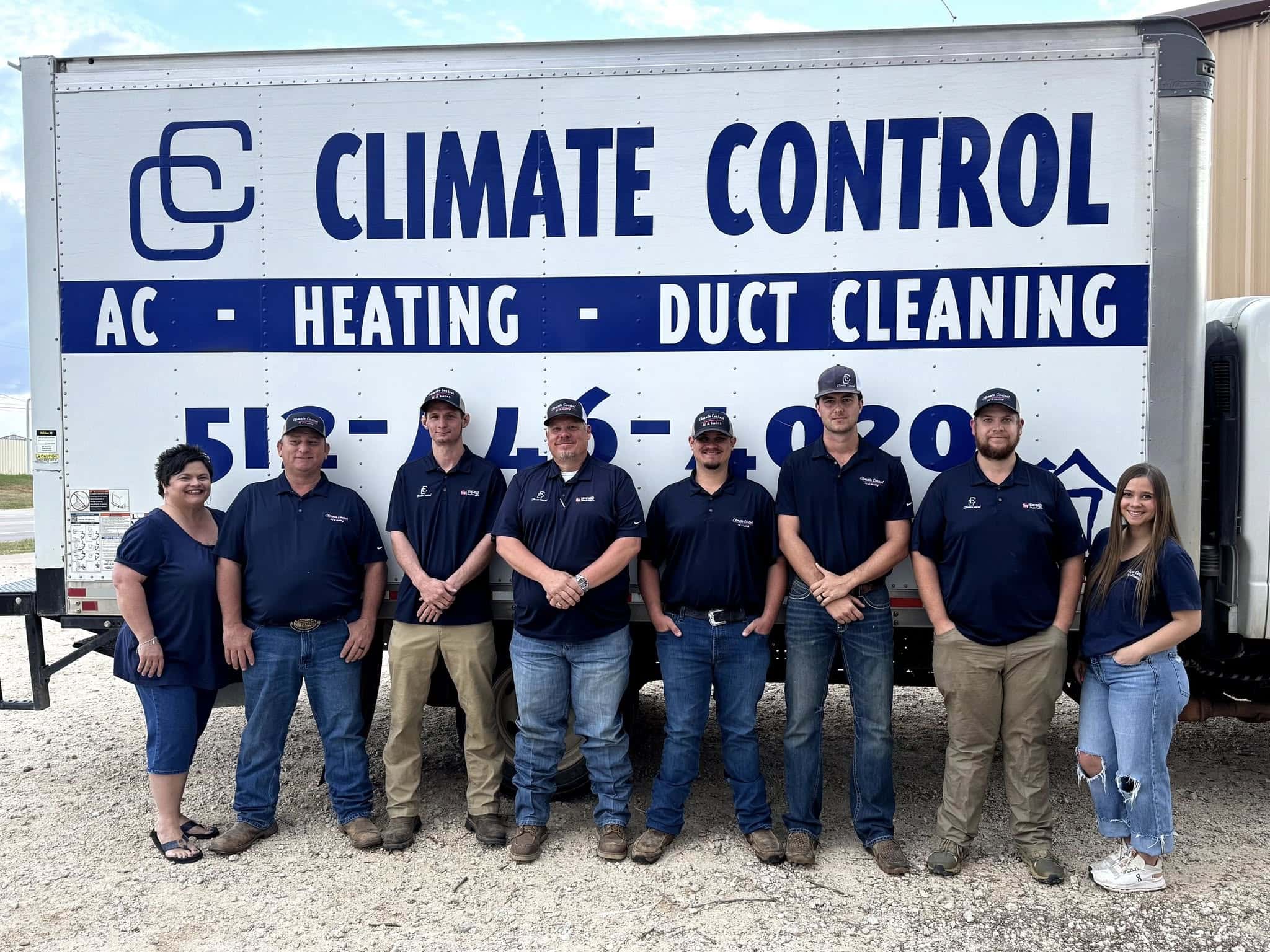
Searching for Duct Cleaning around Pettibone?
Climate Control A/C & Heating services comfort equipment of every kind around the community.
Call 512-446-4020 to describe what your equipment is doing.
Summer Load: Why Equipment Works Hard Here
Warm weather in Pettibone stretches across much of the calendar; a cooling system here logs far more running hours than one in a mild climate.
Water vapor rides along with the heat on a muggy afternoon, and removing it takes steady run time rather than quick bursts.
Right sizing, steady airflow and a clean coil therefore decide how a house feels, long before a breakdown ever happens.
Moving Heat Outdoors: What Each Piece Does
An air conditioner does not create cold; the refrigerant carries heat out of the house and leaves the cool behind.
The indoor coil is where the cooling happens, and the condensing unit in the yard completes the loop by getting rid of the heat.
Parts that wear out fastest are usually the small electrical ones; a failed capacitor is often a small repair rather than the end of the system.
When the House Stops Cooling: Repair Starts With Diagnosis
A proper air conditioning repair sorts the symptom from the cause before anything is replaced; the same warm room can come from a dead capacitor, a frozen coil or a leak.
If the outdoor unit is silent, power, a breaker and the low-voltage wiring are the first suspects, though a part that failed once can point to heat or a loose connection that needs attention.
Ice building up near the air handler tells a technician where to look; switching the system off and letting it thaw protects the equipment until it can be checked.
Refrigerant is not a consumable that needs topping off every season; topping off a leaking system is a temporary patch that lets the problem return.
Algae and debris plug the drain, and many systems have a float switch that stops the cooling; moisture removed from muggy air adds up to gallons a day.
Trouble You Can See and Hear: Small Changes, Big Hints
Air conditioners seldom quit without hints along the way; these are the signs a homeowner can see, hear or feel without any tools:
- Supply air that feels weak or lukewarm despite thin airflow at the vents.
- A burning smell from the vents, often getting louder from one week to the next.
- An outdoor unit that starts and stops every few minutes, with indoor humidity climbing.
- Condensation where there should be none, especially in humid weather.
Preventive Service – the Work Behind Reliable Comfort
Routine AC maintenance heads off the kind of failure that arrives on a hot afternoon; the checklist stays short enough to repeat every season.
A clogged filter chokes the blower and starves the coil of air, which is a quick job that helps the entire system.
Coils, drain pans and drain lines all get attention during a complete tune-up; capacitors, contactors, wiring and motor amperage get checked as well.
Aging Equipment – a Decision Worth Making Carefully
Replacement is worth considering once repairs pile up on equipment that was already aging, and an honest technician explains both paths.
Refrigerant types have changed over time, so older systems may use one that is hard to find, which is another reason to get a clear diagnosis before deciding.
Today's units move the same heat with less power than equipment from a generation ago; the benefit grows in houses that rely on cooling much of the year.
Sizing and Setup: the Groundwork Matters
AC install work succeeds or fails on sizing and airflow before any equipment is delivered; windows, attic insulation and ductwork all change the answer.
Oversizing is a common mistake, and it wears out parts through constant starting, and a proper calculation avoids both extremes.
Every connection, from the refrigerant lines to the thermostat wire, gets sized and routed with care, and the installer verifies airflow and charge before leaving the job.
Duct System Basics: Moving Air Efficiently
In many houses, the ducts decide whether a new system performs as promised, and a unit can be fine while the ducts hold the whole system back.
A long flexible run through a hot attic needs support, sealing and good insulation, which can improve comfort without touching the equipment.
Duct Cleaning: Worth Doing at the Right Time
Air passages collect dust, and duct cleaning is the way to clear it from the inside, and the decision should rest on what is actually in the ducts.
A cleaning that ignores leaks and filtration is a short-term fix at best, and a careful provider will show the owner what was found inside.
The Two-Way Heat Mover: a Natural Fit for Mild Winters
The reversing valve is what lets heat pumps switch between cooling and heating, which suits places where freezing weather is brief.
Defrost cycles and backup heat are normal parts of winter operation, but a heat pump that always needs the backup may have a fault.
Heating With Gas: Reliable Heat for Cold Fronts
Inside a gas furnace, a burner lights, a heat exchanger warms up and the blower pushes air across it; a cracked heat exchanger is a safety issue that calls for a prompt professional look.
Carbon monoxide detectors belong in any home with fuel-burning equipment, and the furnace check is well timed before the first cold front arrives.
Electric Heating Systems – Where It Fits Best
An electric furnace passes air over banks of resistance elements that glow when energized; troubleshooting centers on power, controls and the blower motor.
Resistance heat converts every unit of power to heat, while a heat pump moves several units for each one consumed, and many homes pair a heat pump with strips as a backup.
Heating Services: Planning for Sudden Cold
The heating season is short enough that equipment sits unused for months, then must work on the first cold night, and a test on a mild day beats a surprise on a freezing one.
Heating services cover igniters and burners on gas units, reversing valves on heat pumps and elements on electric ones, and the safety controls get tested along with the comfort ones.
Heating With Water: How Hydronic Systems Differ
Boiler systems heat water or make steam and send it through pipes to radiators, baseboards or in-floor loops; an owner with a boiler should look for experience with water-based heat.
Air in the lines, a stuck valve or a weak pump are common reasons a boiler heats unevenly, and annual attention keeps these systems running quietly.
Indoor Air Quality – Sources, Symptoms and Solutions
Indoor air quality describes what is floating in the air inside a building, from dust and pollen to odors and humidity; allergy seasons put extra load on filters and ducts.
Choosing a filter means balancing how much it removes against how much resistance it adds, and a technician can recommend what the equipment can handle.
Commercial air quality depends on ventilation rates, filtration and the upkeep of rooftop equipment; ventilation rules for occupied spaces set a baseline.
Cleaning the Air Itself – Whole-Home or Single Room
Air purifiers range from a stand-alone machine in one room to a unit tied into the ductwork; a device that makes bold promises deserves a second look.
A purifier works alongside good ventilation and a clean system, not in place of them, and sizing matters here as much as anywhere.
Managing Growth Inside the System: What They Do and What They Do Not
UV lights are a common add-on in humid climates, where the evaporator coil stays wet for months, and a technician can explain which kind fits a given air handler.
Antimicrobial mist is a liquid treatment applied to coils, ducts or surfaces to discourage growth, and it works best where the source of moisture has been dealt with.
Letting a Building Breathe – Controlled and Filtered
Modern buildings are tight, so ventilating on purpose keeps carbon dioxide and odors from building up, and dampers, filters and controls keep the supply of fresh air in balance.
A hot attic loads up the ceiling and the ducts, so attic ventilation and insulation help the system, and this is another reason the whole building matters.
Commercial AC Systems – Equipment Built for Heavier Duty
Commercial air conditioning system designs range from rooftop packages to split systems and multi-zone setups, which is why many businesses plan service around their schedule.
Rooftop units sit in the sun and wind, so the cabinets, the coils and the curbs take a beating, and larger properties may phase work across several units.
Chilled Water Cooling: How They Differ From Packaged Units
A chiller is a large refrigeration machine that chills water for use in many spaces; the equipment is larger, more complex and more closely monitored.
Commercial Refrigeration: What Service Involves
Businesses that sell or store food depend on refrigeration service to hold safe temperatures; frost buildup, warm product and constant running all point to trouble.
How Climate Control A/C & Heating Looks at Duct Cleaning near Pettibone
Conversation comes first, because the owner knows the symptoms better than anyone; the owner understands the situation before any decision.
A repair, a tune-up and a replacement are each described for what they are and what they involve, and the work proceeds only when the owner agrees.
Let's Talk About Your Equipment
Contact us at 512-446-4020 to line up service or learn what to expect.
A Last Word: Small Habits, Big Difference
Interest in Duct Cleaning often starts with a problem, and the solution starts with a clear diagnosis, and Climate Control A/C & Heating answers questions at 512-446-4020.