
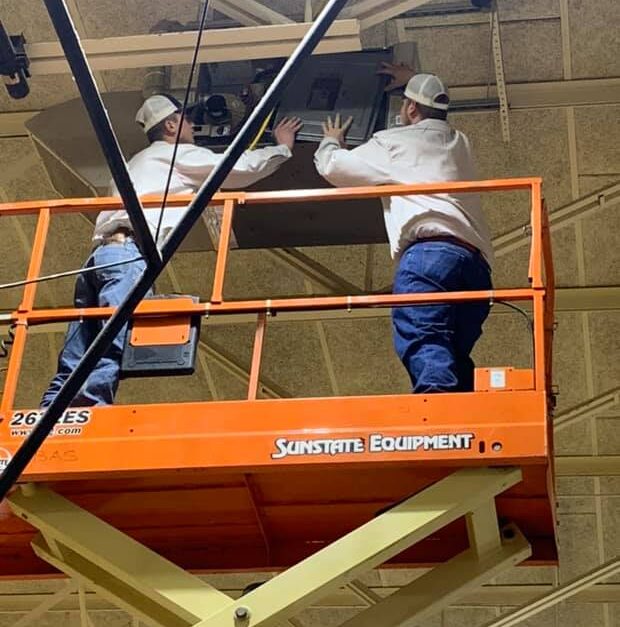
Looking for Commercial AC System in Branchville?
Climate Control A/C & Heating services the equipment that keeps buildings comfortable in the surrounding towns.
Reach us at 512-446-4020 to describe what your equipment is doing.
What Summer Asks of a System: Why Equipment Works Hard Here
Summers across Branchville run long, hot and humid; a cooling system here logs far more running hours than one in a mild climate.
Moisture in the air matters as much as the thermometer reading; the indoor coil acts as the dehumidifier, collecting water that leaves through a drain line.
Right sizing, steady airflow and a clean coil therefore decide how a house feels, whatever the label on the box promises.
Inside an Air Conditioner – Parts and Their Jobs
Cooling equipment does not manufacture chill; the refrigerant carries heat out of the house and leaves the cool behind.
Inside the house, the evaporator coil does the absorbing, and the condensing unit in the yard completes the loop by getting rid of the heat.
Fan motors and start components do a great deal of work for their size, which is why a quick diagnosis matters before anyone talks about replacement.
Cooling Troubles: Repair Starts With Diagnosis
Good AC repair is detective work before it is wrench work; weak cooling is a symptom that many separate faults share.
Electrical faults are common, with capacitors and contactors leading the list of small failures, and they usually repair cleanly because the parts are small.
A coil that ices over points toward airflow or refrigerant; the coil needs to thaw completely before anyone can measure what is going on.
A properly working system keeps its charge for good, since nothing burns it off, and adding more without finding the leak only delays the same problem.
Condensate has to leave the house, so a blocked line sends it somewhere less welcome, and a flush of the line during regular service often prevents the problem.
Clues Your System Is Struggling – What Owners Notice First
A struggling cooling system leaves clues around the house; the list below covers what owners tend to notice:
- Rooms that stay warm though the unit sounds normal.
- A hissing noise near the refrigerant lines, whether or not the cooling seems to work.
- An outdoor unit that starts and stops every few minutes, with indoor humidity climbing.
- Damp spots on the ceiling below the indoor cabinet, particularly after long runs.
Keeping Equipment Healthy: Catching Trouble Before It Grows
Routine AC maintenance heads off the kind of failure that arrives on a hot afternoon, and the visit usually combines cleaning, measuring and tightening.
Changing the filter on schedule protects the coil, the blower and the ductwork, and how often it needs changing depends on the filter type, pets and the season.
The visit usually includes the condenser coil, the evaporator coil and a flush of the drain line; the report reflects measurements rather than guesses.
Aging Equipment: Questions to Ask First
An old unit that needs repair after repair may be a candidate for AC replacement, and a good evaluation lays out repair and replacement side by side.
Some older units run on refrigerant that is now scarce, which affects repair decisions, and newer equipment is built for current refrigerants.
Efficiency has improved steadily, and a modern system can use noticeably less electricity; the benefit grows in houses that rely on cooling much of the year.
Sizing and Setup: the Groundwork Matters
Choosing equipment for an AC install means working out how much heat the structure gains; orientation and shading matter as much as floor area.
An oversized system cools the air quickly and then shuts off before it removes moisture, and a unit that is too small runs constantly without catching up.
A complete installation pairs the condenser, the coil and the air handler as one system, and local permit and inspection rules apply in most towns.
The Hidden Network in the Walls and Attic: Sizing, Sealing and Insulation
Good duct work delivers the right amount of air to each room and brings it back again; undersized trunks, kinked runs and open seams all choke the flow.
Ducts that run through a hot attic lose a surprising amount of cooling on the way to the rooms, and sealing with mastic rather than cloth tape holds up better in the heat.
Cleaning the Air Paths – Deciding if It Fits
Cleaning the ducts means pulling loose material out with agitation tools and a strong vacuum; cleaning is not a substitute for fixing leaks or changing filters.
Filtering, sealing and cleaning form one plan, not three separate jobs; ask to see before-and-after photos of the work.
Reversible Systems – Why They Suit the Region
The reversing valve is what lets heat pumps switch between cooling and heating, which suits places where freezing weather is brief.
On extremely cold days the heat pump leans on supplemental heat to keep up; watch for unusually high bills as a hint.
Gas Furnaces – Parts, Safety and Service
The sequence in a gas furnace runs from thermostat call to draft fan, igniter, gas valve and flame proof; the flue and combustion air must be clear for safe operation.
Carbon monoxide detectors belong in any home with fuel-burning equipment, and a detector near the sleeping areas gives early warning.
Electric Furnaces and Air Handlers – Where It Fits Best
Elements in an electric air handler turn current directly into heat, and the equipment is simple, with few moving parts.
Compared with a heat pump, strips and electric furnaces draw heavily for the heat they make; the choice depends on what fuel is available at the property.
Heating Systems of Every Type – Reliable Heat on Demand
A norther can send temperatures tumbling, and heating systems that sat idle all summer must start right up, which is why heating services are well scheduled in fall.
Heating services cover igniters and burners on gas units, reversing valves on heat pumps and elements on electric ones, and a technician adjusts the visit to the equipment on site.
Boiler Systems: How Hydronic Systems Differ
Radiant floor and baseboard heating both rely on a boiler to heat the water, and they are less common in Texas than furnaces and heat pumps.
Service on boiler systems covers the burner, the water pressure, the circulator pump, the expansion tank and the safety relief valve, and bleeding air from the loops is a routine task.
Cleaner Air Indoors – the Part You Cannot See
Indoor air quality describes what is floating in the air inside a building, from dust and pollen to odors and humidity, and cleaner air depends on filtration, ventilation and moisture control working together.
Residential air quality improves when the filter fits the system and gets changed on schedule; a deeper media cabinet gives better filtering with less restriction.
Offices, shops and restaurants need steady fresh air so that crowds do not make the space stuffy, and a maintenance plan fits the building's size and hours.
Air Purification Options: Matching the Tool to the Problem
Purifiers remove particles or gases from the air, and they come as whole-home units or portable room models, and the right choice depends on what needs removing.
A purifier works alongside good ventilation and a clean system, not in place of them, which is why one device rarely fits every home.
Light and Mist Treatments – Tools for a Damp Climate
UV lights are a common add-on in humid climates, where the evaporator coil stays wet for months; ask what the lamp targets and how often it needs service.
An antimicrobial mist is sprayed or fogged onto surfaces inside the system or the building; the label for the product spells out how it is to be used.
Ventilating: the Case for Planned Airflow
Bath fans, kitchen hoods and outdoor air intakes are all part of ventilating a modern building; an energy recovery ventilator can trade heat and moisture between the two airstreams.
Exhaust fans that move air out of kitchens and baths should vent outdoors, not into the attic; the equipment, the envelope and the airflow work as a team.
Commercial Cooling – Planning Around the Business
A commercial AC system is sized for heat from people, lighting and machines as well as sunshine, and filters, belts, coils and drains are the usual checklist items.
Commercial equipment is built to run long hours, and it still depends on clean coils and clear drains, and a technician can map out options on site.
Chiller Systems for Larger Buildings: Parts and Service Needs
A building with chilled water pulls its cooling from a central plant rather than separate rooftop units, and they need specialized service knowledge.
Commercial Refrigeration: What Service Involves
Refrigeration service covers walk-in coolers, reach-in units, freezers, display cases and ice machines; regular cleaning of condenser coils matters even more than in comfort cooling.
How Climate Control A/C & Heating Thinks About Commercial AC System across Branchville
A good service call begins with listening to what the owner has noticed, then examines the equipment and measures what can be measured.
Recommendations come with explanations, so choices rest on information rather than pressure, and questions are welcome at every stage.
Start With a Conversation
Reach out at 512-446-4020 to line up service or learn what to expect.
What to Remember – Equipment, Airflow and Air Quality
Whether the need falls under Commercial AC System or elsewhere in the heating, cooling and air quality family, the same principles apply, with Climate Control A/C & Heating at 512-446-4020 to start the conversation.