
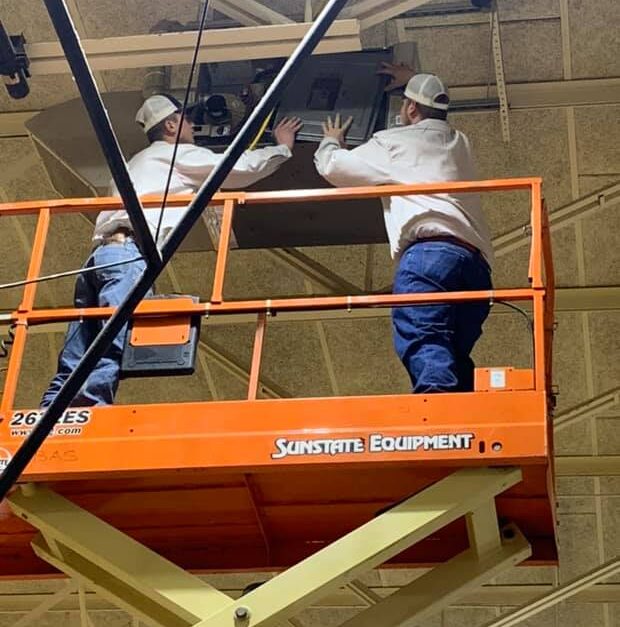
Searching for Chiller Systems throughout Cameron?
Climate Control A/C & Heating services climate equipment for homes and businesses close to home.
Call 512-446-4020 and tell us what you are noticing.
Heat and Humidity: the Climate Behind the Equipment
Warm weather in Cameron stretches across much of the calendar; a cooling system here logs far more running hours than one in a mild climate.
Humidity is half of the comfort problem, not an afterthought; an air conditioner pulls it out as a side effect of cooling, but only while it is actually running.
Capacity, airflow and cleanliness work together, and a weakness in one shows up as a house that never feels quite right, regardless of which brand is on the cabinet.
Moving Heat Outdoors: a Plain Explanation
Air conditioning is the business of relocating heat; warmth is absorbed in one coil and released in another.
Warm indoor air passes over a cold coil in the air handler or furnace cabinet; outdoors, a fan pulls air across the condenser coil to shed the load.
The contactor, the capacitor and the motors take a beating in hot weather, and the larger parts usually go on to last much longer.
Diagnosing a Weak Cooling System – Sorting Symptoms From Causes
AC repair that works starts with measurements, because guessing wastes time and parts; the same warm room can come from a dead capacitor, a frozen coil or a leak.
A tripped breaker, a failed capacitor or a worn contactor keeps the outdoor unit from starting, and each can be tested with a meter in a few minutes.
Frost on the indoor coil or the copper line is a warning sign, not a cooling success, and running the system while it is frozen can damage the compressor.
Refrigerant is sealed in a loop and does not get used up; a responsible repair locates the leak instead of simply adding more.
Water around the air handler often means the condensate line has clogged with slime, and the fix is usually quick once the blockage is found.
Symptoms Worth Noticing: Trust Your Senses
The system tends to behave differently well before the day it stops; the list below covers what owners tend to notice:
- Some rooms that never cool down while the system runs nonstop.
- Grinding, squealing or rattling from the outdoor cabinet, sometimes only on the hottest afternoons.
- An outdoor unit that starts and stops every few minutes, even though the thermostat is satisfied.
- Condensation where there should be none, often tracing back to the drain line.
Regular Maintenance: Habits That Pay Off Later
Scheduled air conditioning maintenance gives a technician a look at the system while it still works, and the work centers on airflow, cleanliness and electrical health.
Changing the filter on schedule protects the coil, the blower and the ductwork; homes with pets, dust or a constant run schedule need fresh filters more often.
Heat flows through each of the coils, and each one loses capacity when it collects dirt; capacitors, contactors, wiring and motor amperage get checked as well.
When Replacement Makes Sense: Questions to Ask First
The conversation about replacement starts when age, condition and comfort all point the same way, and a good evaluation lays out repair and replacement side by side.
A system built around a retired refrigerant can be a poor candidate for major repairs; matching parts and refrigerant correctly keeps the whole loop reliable.
Variable-speed designs hold temperature and humidity more precisely than single-stage units; replacement can pay back in comfort as well as in energy use.
Getting an Install Right: Details That Shape Comfort
An air conditioning install starts with a load calculation, not a rule of thumb, and the standard method for homes is a room-by-room heat gain calculation.
Oversizing is a common mistake, and it wears out parts through constant starting; careful sizing protects comfort and the equipment.
The indoor and outdoor parts have to match each other and the ductwork, and local permit and inspection rules apply in most towns.
The Hidden Network in the Walls and Attic: the Lungs of the House
Duct work moves the air that the equipment has cooled or heated, so its design shapes every room; undersized trunks, kinked runs and open seams all choke the flow.
Runs through an unconditioned attic or crawl space gain heat or lose chill unless sealed and wrapped, and a technician can often find the leaks with a pressure test.
When Ducts Need Attention: Realistic Expectations
Duct cleaning removes dust and debris from the supply and return runs, the registers and the blower compartment; a house with no such history may not need it often.
Clean ducts work best alongside a good filter and sealed connections, and claims about health benefits should be treated skeptically.
Heat Pump Basics – Efficient Most of the Year
Heat pumps move heat in both directions, cooling in summer and heating in winter, and one system handles both seasons with a single set of equipment.
When outdoor temperatures fall far enough, electric strips or a furnace add the missing warmth, but a heat pump that always needs the backup may have a fault.
Gas Furnaces – the Machinery in the Closet
Inside a gas furnace, a burner lights, a heat exchanger warms up and the blower pushes air across it; a cracked heat exchanger is a safety issue that calls for a prompt professional look.
Carbon monoxide detectors belong in any home with fuel-burning equipment, and homeowners should keep the area around the furnace clear of clutter.
Resistance and Strip Heat – Where It Fits Best
An electric furnace passes air over banks of resistance elements that glow when energized, and the main wear items are the elements, the sequencers and the blower.
Homes with strip heat often see bigger winter bills than homes with efficient heat pumps, particularly where cold stretches are brief.
Getting Ready for Cold Weather – Test Before You Need It
A norther can send temperatures tumbling, and heating systems that sat idle all summer must start right up; problems found early can be repaired before a cold front arrives.
Furnaces, heat pumps and electric air handlers all heat homes, and each has its own checkup list; one failed switch can shut down an otherwise healthy system.
Heating With Water: Found in Older and Larger Buildings
Boiler systems appear in older buildings, larger properties and some commercial spaces, and they are less common in Texas than furnaces and heat pumps.
Service on boiler systems covers the burner, the water pressure, the circulator pump, the expansion tank and the safety relief valve; water damage can grow quickly.
The Air Inside Your Walls: Why It Deserves Attention
The air in a house mixes outdoor pollen, indoor dust and chemicals from everyday products, and in Texas, cedar pollen and spring dust can find their way inside.
Choosing a filter means balancing how much it removes against how much resistance it adds; a deeper media cabinet gives better filtering with less restriction.
Businesses face their own air issues, from shared air handlers to customers coming and going all day, and a maintenance plan fits the building's size and hours.
Filters, Purifiers and Their Limits: Matching the Tool to the Problem
Purifiers vary widely, from simple filters to units combining filtration, carbon and other methods; pollen and dust call for filtration, while odors call for carbon.
Equipment that cleans the air cannot make up for a dirty coil or a leaky return; a technician looks at the system before recommending a device.
Add-On Air Treatments: Where They Fit
Lamps inside the cabinet work on the coil and pan, and they need replacing on a schedule, and results depend on placement, dose and the lamp type.
Mist treatments use an approved solution applied by a technician in a controlled way; the underlying cause still has to be fixed.
Fresh Air and Exhaust – Not Too Much, Not Too Little
Ventilating a building means replacing stale indoor air with fresh outdoor air in a controlled way, and dampers, filters and controls keep the supply of fresh air in balance.
Attic ventilation is a separate matter, but it affects how hard the cooling system works; the equipment, the envelope and the airflow work as a team.
Cooling for Shops, Offices and Buildings: Comfort That Supports the Work
Every commercial air conditioning system serves a space with different loads from a house, such as crowds, lighting and equipment, which is why many businesses plan service around their schedule.
Coil cleaning, belt checks and economizer inspections are part of keeping commercial equipment dependable, and replacement decisions weigh downtime as well as equipment.
Central Plant Equipment: Where They Make Sense
A chiller is a large refrigeration machine that chills water for use in many spaces, and water treatment, tube cleaning and refrigerant checks are routine tasks.
Commercial Refrigeration: Walk-Ins, Reach-Ins and More
Businesses that sell or store food depend on refrigeration service to hold safe temperatures, which is why restaurants and stores plan service ahead of busy seasons.
How Climate Control A/C & Heating Looks at Chiller Systems around Cameron
A good service call begins with listening to what the owner has noticed, and then the system gets inspected with gauges, meters and a careful eye.
A repair, a tune-up and a replacement are each described for what they are and what they involve, and the work proceeds only when the owner agrees.
Questions About Your System Are Welcome
Call 512-446-4020 to book a technician or get a straight answer.
Closing Thoughts – Keep Things Simple
From Chiller Systems to routine upkeep, good outcomes come from understanding the equipment and caring for it; reach Climate Control A/C & Heating at 512-446-4020 when you are ready.