
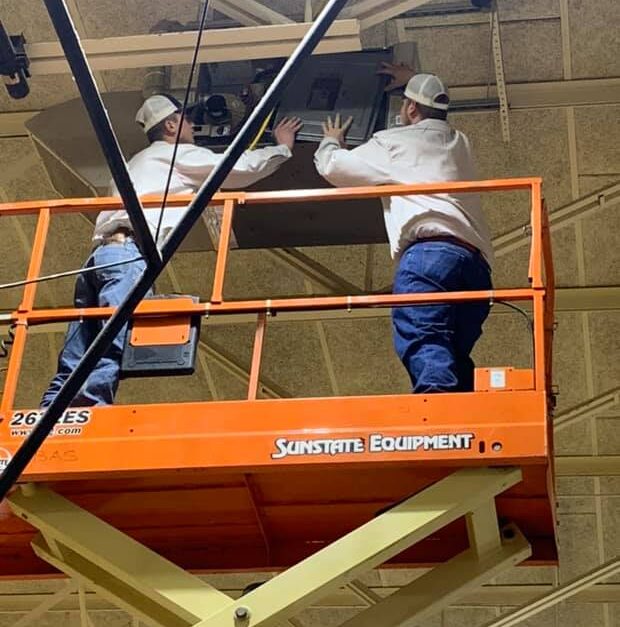
Searching for Commercial AC System around Cameron?
Climate Control A/C & Heating supports comfort equipment of every kind in the surrounding towns.
Contact us at 512-446-4020 and tell us what you are noticing.
The Cooling Season: Why Equipment Works Hard Here
Hot weather in Cameron settles in for months at a time, which means a cooling unit seldom rests between spring and fall.
Humidity is half of the comfort problem, not an afterthought; a cooling system dehumidifies only when the compressor is on and air is moving across the coil.
Proper equipment size, good airflow and clean surfaces separate a comfortable house from a clammy one, regardless of which brand is on the cabinet.
How Air Conditioning Works: What Each Piece Does
Nothing in a cooling system generates cold air from scratch; the refrigerant carries heat out of the house and leaves the cool behind.
Inside the house, the evaporator coil does the absorbing, and the condensing unit in the yard completes the loop by getting rid of the heat.
The contactor, the capacitor and the motors take a beating in hot weather, and the larger parts usually go on to last much longer.
Diagnosing a Weak Cooling System: Where the Fault Usually Hides
AC repair that works starts with measurements, because guessing wastes time and parts; three very different faults can feel identical from the thermostat.
Electrical faults are common, with capacitors and contactors leading the list of small failures, and they usually repair cleanly because the parts are small.
Ice on the lines almost always means too little air or too little refrigerant; switching the system off and letting it thaw protects the equipment until it can be checked.
Low refrigerant means a leak, because the charge stays put when the loop is tight, and the leak is the thing that has to be found and dealt with.
Clogged condensate drains are a quiet cause of water stains and shutdowns, and clearing the line is routine maintenance work.
Warning Signs: Small Changes, Big Hints
Air conditioners seldom quit without hints along the way; the list below covers what owners tend to notice:
- Rooms that stay warm despite thin airflow at the vents.
- Loud banging when the compressor starts, particularly at the start of a cycle.
- Constant starting and stopping through the afternoon; parts wear faster.
- Damp spots on the ceiling below the indoor cabinet, particularly after long runs.
Tune-Ups for Cooling Gear – Small Tasks, Long Equipment Life
Air conditioning maintenance keeps dust, grime and wear from piling up unseen; the technician cleans what gets dirty and measures what can drift.
Filters catch the dust that would otherwise coat the indoor coil, and how often it needs changing depends on the filter type, pets and the season.
The visit usually includes the condenser coil, the evaporator coil and a flush of the drain line, and reading the numbers shows whether anything is drifting out of range.
Time for a Change – Age, Condition and Efficiency
Air conditioning equipment reaches a point where a new system makes more sense than another fix, and a good evaluation lays out repair and replacement side by side.
Refrigerant types have changed over time, so older systems may use one that is hard to find, and that can tip a close decision toward replacement.
Newer cooling equipment is generally more efficient than older models, and in a long cooling season those savings add up.
Getting an Install Right: Where Good Results Begin
Choosing equipment for an AC install means working out how much heat the structure gains; windows, attic insulation and ductwork all change the answer.
An oversized system cools the air quickly and then shuts off before it removes moisture; the right size runs long, steady cycles that dry the air.
A complete installation pairs the condenser, the coil and the air handler as one system; commissioning measurements confirm that the system performs as designed.
Air Distribution – Where Comfort Is Won or Lost
In many houses, the ducts decide whether a new system performs as promised, which is why the airflow measurement is part of a proper diagnosis.
Runs through an unconditioned attic or crawl space gain heat or lose chill unless sealed and wrapped; the usual fix is sealing the seams, supporting the runs and adding insulation.
Cleaning the Air Paths – Reasons and Limits
Duct cleaning is a mechanical job that brushes loose and vacuums out what has collected; construction dust, rodents or visible mold growth are the usual reasons to schedule it.
Dirt returns quickly if the filter is poor or the returns leak unfiltered air, and a careful provider will show the owner what was found inside.
Heat Pumps: a Natural Fit for Mild Winters
Heat pumps move heat in both directions, cooling in summer and heating in winter, and one system handles both seasons with a single set of equipment.
A heat pump may call on backup heat during a hard freeze or while defrosting its coil, but a heat pump that always needs the backup may have a fault.
Heating With Gas: What Owners Should Know
Gas furnaces rely on an igniter, a flame sensor and a gas valve working in sequence, and a dirty flame sensor is a frequent reason for a furnace that lights and then shuts off.
Combustion appliances produce carbon monoxide, which is why detectors and clear vents matter, and stored items near the unit can block airflow and combustion air.
Electric Heating Systems: How the Elements Work
Electric heat uses sequenced elements, relays and limit switches to warm the house; the electrical safety devices do the most important work.
Homes with strip heat often see bigger winter bills than homes with efficient heat pumps; the decision rests on the building, not just the equipment.
Heating Systems of Every Type: What to Do Before the First Freeze
Winters in Texas are short, but cold fronts can drop temperatures sharply in a matter of hours; problems found early can be repaired before a cold front arrives.
Heating systems come in several forms, and the same house may use gas furnaces, heat pumps or electric heating systems, and the safety controls get tested along with the comfort ones.
Boilers – Radiators, Coils and Radiant Floors
A boiler warms water in a closed loop, and pumps circulate it to the rooms, but a building with a boiler needs service from someone who knows hydronics.
The relief valve and low-water cutoff protect a boiler, so they get tested during service; water damage can grow quickly.
What You Breathe at Home: Starting With Facts
Good indoor air quality means controlling particles, humidity, fresh air and sources of contamination; allergy seasons put extra load on filters and ducts.
Choosing a filter means balancing how much it removes against how much resistance it adds, and sealing return leaks keeps unfiltered air from sneaking around the filter.
Commercial air quality depends on ventilation rates, filtration and the upkeep of rooftop equipment; scheduled filter changes and coil cleaning keep these systems honest.
Purifiers – Useful, With Realistic Goals
Air purifiers range from a stand-alone machine in one room to a unit tied into the ductwork; any claims about performance should be checked against the specification.
Good results come from a purifier chosen to complement the rest of the system, and a conversation about the whole house usually comes first.
Add-On Air Treatments – Reasonable Expectations
Lamps inside the cabinet work on the coil and pan, and they need replacing on a schedule, and results depend on placement, dose and the lamp type.
Mist treatments use an approved solution applied by a technician in a controlled way; the product and method should be explained in advance.
Bringing Outdoor Air In: the Case for Planned Airflow
Ventilating also removes moisture from kitchens and baths before it settles into the structure, and in a humid climate the incoming air needs dehumidifying.
Attic ventilation is a separate matter, but it affects how hard the cooling system works, and a technician who looks at the surroundings sees more than the unit alone.
Commercial Cooling: Comfort That Supports the Work
Shops, restaurants, offices and churches often rely on rooftop equipment that serves a zone of the building, and when it fails the business feels it quickly.
Rooftop units sit in the sun and wind, so the cabinets, the coils and the curbs take a beating, and a technician can map out options on site.
Cooling at Scale: How They Differ From Packaged Units
Instead of cooling air directly, chiller systems cool a water loop that serves coils across the property; the equipment is larger, more complex and more closely monitored.
Keeping Food and Product Cold: What Service Involves
Businesses that sell or store food depend on refrigeration service to hold safe temperatures; frost buildup, warm product and constant running all point to trouble.
How Climate Control A/C & Heating Goes About Commercial AC System around Cameron
Before touching a tool, the technician hears the history of the problem from the person who lives with it, followed by an explanation of what was found and what the choices are.
Options are laid out clearly, with the reasons behind each recommendation, and questions are welcome at every stage.
Comfort Is a Phone Call Away
Contact us at 512-446-4020 to book a technician or get a straight answer.
A Last Word: Small Habits, Big Difference
Searching for Commercial AC System in Cameron usually leads to the same few questions about size, age, airflow and care, with Climate Control A/C & Heating at 512-446-4020 to start the conversation.