
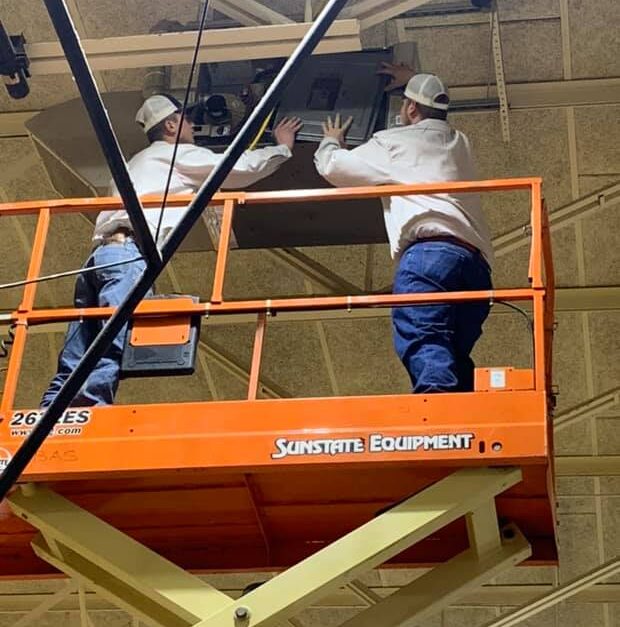
Searching for Duct System near Davilla?
Climate Control A/C & Heating supports comfort equipment of every kind here at home.
Call 512-446-4020 and ask a real question.
Summer Load: Local Conditions Come First
Summers across Davilla run long, hot and humid, which means a cooling unit seldom rests between spring and fall.
Sticky air can make a cool room feel uncomfortable, and the coil is where the moisture condenses and drains away.
Matching capacity to the house, moving enough air and keeping the coil clean all shape the result, and each one is something a technician can check on site.
Inside an Air Conditioner: a Plain Explanation
Air conditioning is the business of relocating heat; warmth is absorbed in one coil and released in another.
Inside the house, the evaporator coil does the absorbing, and the condensing unit in the yard completes the loop by getting rid of the heat.
Parts that wear out fastest are usually the small electrical ones; the compressor itself can last a long time when it is kept clean and properly charged.
When the House Stops Cooling: Repair Starts With Diagnosis
Air conditioning repair begins with finding out why the system quit, not with swapping parts, and a house that is warm may have an electrical fault, an airflow problem or a refrigerant problem.
Electrical faults are common, with capacitors and contactors leading the list of small failures, though a part that failed once can point to heat or a loose connection that needs attention.
Ice on the lines almost always means too little air or too little refrigerant, and the cause may be as simple as a clogged filter or as involved as a leak.
Refrigerant is not a consumable that needs topping off every season, which is why measuring pressures and temperatures matters more than adding gas.
Water around the air handler often means the condensate line has clogged with slime, and clearing the line is routine maintenance work.
Symptoms Worth Noticing: Trust Your Senses
Cooling equipment usually gives notice before it fails outright, and the following signs are worth acting on:
- Supply air that feels weak or lukewarm even though the blower sounds normal.
- A hissing noise near the refrigerant lines, whether or not the cooling seems to work.
- Repeated short runs that never finish a cooling cycle; parts wear faster.
- Damp spots on the ceiling below the indoor cabinet, often tracing back to the drain line.
Preventive Service: Habits That Pay Off Later
Scheduled air conditioning maintenance gives a technician a look at the system while it still works; the checklist stays short enough to repeat every season.
A clogged filter chokes the blower and starves the coil of air, and how often it needs changing depends on the filter type, pets and the season.
A technician cleans or inspects the outdoor coil, the indoor coil and the condensate drain, and reading the numbers shows whether anything is drifting out of range.
Aging Equipment: Weighing the Options Honestly
Replacement is worth considering once repairs pile up on equipment that was already aging, and an honest technician explains both paths.
Refrigerant types have changed over time, so older systems may use one that is hard to find, and newer equipment is built for current refrigerants.
Efficiency has improved steadily, and a modern system can use noticeably less electricity, and comfort improves along with the numbers.
Planning a New Installation – Bigger Is Not Better
An air conditioning install starts with a load calculation, not a rule of thumb, and two houses of the same size can need very different equipment.
Too much capacity leads to short cycling, uneven rooms and a clammy feel, and a proper calculation avoids both extremes.
Matched components perform to their design efficiency, while mismatched ones fall short, and the installer verifies airflow and charge before leaving the job.
Air Distribution: Sizing, Sealing and Insulation
In many houses, the ducts decide whether a new system performs as promised, and a unit can be fine while the ducts hold the whole system back.
Attic duct work in Texas sees extreme heat, so insulation and tight seams earn their keep, and sealing with mastic rather than cloth tape holds up better in the heat.
When Ducts Need Attention – Deciding if It Fits
Cleaning the ducts means pulling loose material out with agitation tools and a strong vacuum; cleaning is not a substitute for fixing leaks or changing filters.
A cleaning that ignores leaks and filtration is a short-term fix at best, and a plain look inside the duct tells the real story.
The Two-Way Heat Mover: How the Technology Works
A heat pump is an air conditioner that can run backward to warm the house, and that makes them efficient in climates with mild winters.
On extremely cold days the heat pump leans on supplemental heat to keep up, and a technician can check whether the strips are running more than they should.
Fuel-Fired Warmth – Parts, Safety and Service
A furnace heats air by passing it over a hot metal exchanger while exhaust gases leave through a flue, and a fault in any one step can stop the whole cycle.
Carbon monoxide detectors belong in any home with fuel-burning equipment, and the furnace check is well timed before the first cold front arrives.
Electric Furnaces and Air Handlers: What to Expect From It
Electric heat uses sequenced elements, relays and limit switches to warm the house, and the main wear items are the elements, the sequencers and the blower.
Resistance heat converts every unit of power to heat, while a heat pump moves several units for each one consumed, and a technician can explain how each option behaves in a mild climate.
Warmth When the Front Arrives – Reliable Heat on Demand
Winters in Texas are short, but cold fronts can drop temperatures sharply in a matter of hours; running the heater briefly in fall shows whether it lights, blows warm air and shuts off properly.
Furnaces, heat pumps and electric air handlers all heat homes, and each has its own checkup list, which keeps the work simple to explain and easy to follow.
Boiler Systems – Quiet, Even Heat
Hydronic heating moves heat with water instead of air, which makes for quiet, even warmth, and they are less common in Texas than furnaces and heat pumps.
Air in the lines, a stuck valve or a weak pump are common reasons a boiler heats unevenly; leaks near joints deserve prompt attention.
Air Quality Basics: Why It Deserves Attention
Air inside a home can carry particles, gases and moisture that the thermostat never shows; allergy seasons put extra load on filters and ducts.
Residential air quality improves when the filter fits the system and gets changed on schedule; humidity control prevents the conditions mold needs.
Larger buildings circulate air through central equipment, so one fault can reach every room, and employee and customer comfort both depend on it.
Choosing an Air Cleaner: What the Labels Mean
Some purifiers capture particles with high-efficiency filters, and others target odors with carbon, and the right choice depends on what needs removing.
Equipment that cleans the air cannot make up for a dirty coil or a leaky return; the goal is a measurable improvement, not a gadget.
Keeping Coils Clean Between Visits: Where They Fit
A UV lamp does not clean the air passing by, but it treats the surfaces it can see; the lamp supplements regular cleaning rather than replacing it.
Mist treatments use an approved solution applied by a technician in a controlled way; the product and method should be explained in advance.
Bringing Outdoor Air In: the Case for Planned Airflow
Ventilating a building means replacing stale indoor air with fresh outdoor air in a controlled way, which is where design and service make a real difference.
Ductwork that dumps moisture into an attic can create damage far from the source; the equipment, the envelope and the airflow work as a team.
Business Climate Control – Equipment Built for Heavier Duty
A commercial AC system is sized for heat from people, lighting and machines as well as sunshine, and when it fails the business feels it quickly.
Rooftop units sit in the sun and wind, so the cabinets, the coils and the curbs take a beating; a clear plan helps the business stay open.
Chilled Water Cooling: How They Differ From Packaged Units
A chiller is a large refrigeration machine that chills water for use in many spaces, and the plant includes a chiller, pumps, a cooling tower or air-cooled condenser, and controls.
Cold Storage Equipment: Walk-Ins, Reach-Ins and More
A refrigeration problem is often found in the condenser, the defrost control or a worn door gasket, which is why restaurants and stores plan service ahead of busy seasons.
How Climate Control A/C & Heating Works Through Duct System in Davilla
The technician asks what changed, what is happening and how long it has been going on, and then the system gets inspected with gauges, meters and a careful eye.
Honest advice separates the necessary from the optional, and the owner stays in control of the decision.
Let's Talk About Your Equipment
Contact us at 512-446-4020 to describe what is going on and find the next step.
Putting It Together: Attention Now Saves Trouble Later
Whether the need falls under Duct System or elsewhere in the heating, cooling and air quality family, the same principles apply; reach Climate Control A/C & Heating at 512-446-4020 when you are ready.