
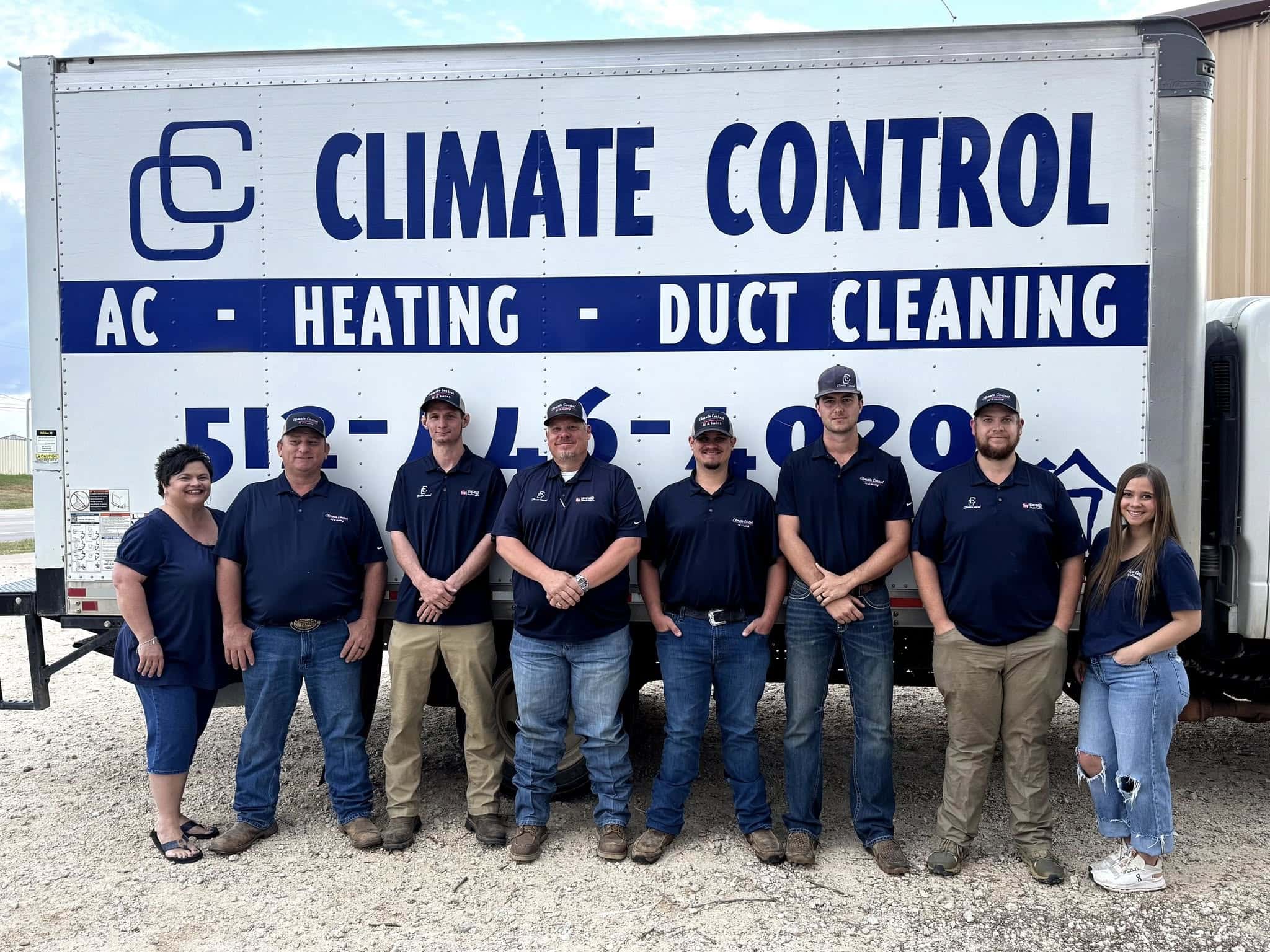
Searching for Commercial Air Conditioning System across Milam County?
Climate Control A/C & Heating supports comfort equipment of every kind in the surrounding towns.
Reach us at 512-446-4020 and tell us what you are noticing.
What Summer Asks of a System – the Setting for Every Choice
Hot weather in Milam County settles in for months at a time, and a home air conditioner may run most of the day through the worst of it.
Sticky air can make a cool room feel uncomfortable, and the coil is where the moisture condenses and drains away.
Right sizing, steady airflow and a clean coil therefore decide how a house feels, long before a breakdown ever happens.
The Refrigerant Cycle: a Plain Explanation
Nothing in a cooling system generates cold air from scratch; it collects heat inside the house and dumps it into the outdoor air.
Inside the house, the evaporator coil does the absorbing; outdoors, a fan pulls air across the condenser coil to shed the load.
The contactor, the capacitor and the motors take a beating in hot weather; the compressor itself can last a long time when it is kept clean and properly charged.
When the House Stops Cooling: Where the Fault Usually Hides
Good AC repair is detective work before it is wrench work; the same warm room can come from a dead capacitor, a frozen coil or a leak.
If the outdoor unit is silent, power, a breaker and the low-voltage wiring are the first suspects, and they usually repair cleanly because the parts are small.
A frozen evaporator coil blocks the very air it is supposed to cool, and running the system while it is frozen can damage the compressor.
A properly working system keeps its charge for good, since nothing burns it off, and the leak is the thing that has to be found and dealt with.
Clogged condensate drains are a quiet cause of water stains and shutdowns, and a flush of the line during regular service often prevents the problem.
Clues Your System Is Struggling: Trust Your Senses
The system tends to behave differently well before the day it stops, and the following signs are worth acting on:
- Some rooms that never cool down even though the blower sounds normal.
- A buzzing or clicking sound at startup, especially when the weather is hot.
- An outdoor unit that starts and stops every few minutes, even though the thermostat is satisfied.
- Water around the air handler, often tracing back to the drain line.
Tune-Ups for Cooling Gear: What a Maintenance Visit Covers
Regular AC maintenance trims the chance of a breakdown during the hottest week; the checklist stays short enough to repeat every season.
Changing the filter on schedule protects the coil, the blower and the ductwork; homes with pets, dust or a constant run schedule need fresh filters more often.
A technician cleans or inspects the outdoor coil, the indoor coil and the condensate drain; temperature drop and refrigerant pressures are measured to show how the loop is behaving.
Time for a Change – a Decision Worth Making Carefully
An old unit that needs repair after repair may be a candidate for AC replacement; the decision belongs to the owner, who deserves the facts.
Some older units run on refrigerant that is now scarce, which affects repair decisions, and that can tip a close decision toward replacement.
Efficiency numbers on new equipment, such as SEER2, give a way to compare models fairly, and comfort improves along with the numbers.
Matching a System to a House: the Groundwork Matters
Proper AC install planning measures the house, the windows, the insulation and the sun exposure; orientation and shading matter as much as floor area.
A unit that is too large satisfies the thermostat fast and leaves the humidity behind, and a unit that is too small runs constantly without catching up.
Every connection, from the refrigerant lines to the thermostat wire, gets sized and routed with care; commissioning measurements confirm that the system performs as designed.
The Hidden Network in the Walls and Attic – What Hides Above the Ceiling
A duct system is the network of channels that carry conditioned air to every room and returns it for re-cooling; a house with comfort problems deserves a look at its air paths.
Runs through an unconditioned attic or crawl space gain heat or lose chill unless sealed and wrapped; the usual fix is sealing the seams, supporting the runs and adding insulation.
Clearing Out the Channels: What It Can and Cannot Do
Air passages collect dust, and duct cleaning is the way to clear it from the inside, and it makes the most sense after a renovation, a pest problem or visible contamination.
Cleaning pays off only when the source of the dirt is also addressed, and claims about health benefits should be treated skeptically.
The Two-Way Heat Mover: Strengths and Limits
A heat pump is an air conditioner that can run backward to warm the house, and that makes them efficient in climates with mild winters.
On extremely cold days the heat pump leans on supplemental heat to keep up, and a technician can check whether the strips are running more than they should.
Burners, Igniters and Flues: Reliable Heat for Cold Fronts
A furnace heats air by passing it over a hot metal exchanger while exhaust gases leave through a flue, and a fault in any one step can stop the whole cycle.
Combustion appliances produce carbon monoxide, which is why detectors and clear vents matter, and the furnace check is well timed before the first cold front arrives.
Electric Furnaces and Air Handlers: How the Elements Work
An electric furnace passes air over banks of resistance elements that glow when energized; troubleshooting centers on power, controls and the blower motor.
Resistance heat converts every unit of power to heat, while a heat pump moves several units for each one consumed; the choice depends on what fuel is available at the property.
Getting Ready for Cold Weather: Planning for Sudden Cold
Heating season in this part of Texas is brief, with sudden swings between warm days and freezing nights; heating systems are better checked before they are needed.
Heating systems come in several forms, and the same house may use gas furnaces, heat pumps or electric heating systems, and a technician adjusts the visit to the equipment on site.
Boiler Systems: Found in Older and Larger Buildings
Boiler systems appear in older buildings, larger properties and some commercial spaces; the region mostly uses forced air, so boilers are the exception.
The relief valve and low-water cutoff protect a boiler, so they get tested during service, and annual attention keeps these systems running quietly.
Air Quality Basics: Beyond Temperature and Humidity
Indoor air quality describes what is floating in the air inside a building, from dust and pollen to odors and humidity, and in Texas, cedar pollen and spring dust can find their way inside.
Choosing a filter means balancing how much it removes against how much resistance it adds, and a technician can recommend what the equipment can handle.
Businesses face their own air issues, from shared air handlers to customers coming and going all day; scheduled filter changes and coil cleaning keep these systems honest.
Air Purification Options: Sorting Fact From Marketing
Air purifiers range from a stand-alone machine in one room to a unit tied into the ductwork; a device that makes bold promises deserves a second look.
A purifier works alongside good ventilation and a clean system, not in place of them, and sizing matters here as much as anywhere.
UV Lights and Antimicrobial Mist: What They Do and What They Do Not
Lamps inside the cabinet work on the coil and pan, and they need replacing on a schedule, and results depend on placement, dose and the lamp type.
Antimicrobial mist is a liquid treatment applied to coils, ducts or surfaces to discourage growth; the underlying cause still has to be fixed.
Ventilating: Why Tight Buildings Need It
Modern buildings are tight, so ventilating on purpose keeps carbon dioxide and odors from building up; the cooling equipment has to be sized to handle the fresh air coming in.
Good attic airflow lowers the heat that leaks down into the living space, and the same attention applies to the whole building.
Cooling for Shops, Offices and Buildings: Uptime Matters
A commercial AC system is sized for heat from people, lighting and machines as well as sunshine, and when it fails the business feels it quickly.
Commercial equipment is built to run long hours, and it still depends on clean coils and clear drains; planning a changeout around business hours limits disruption.
Chiller Systems for Larger Buildings – Water Carries the Cold
Chiller systems are used in large offices, schools, hospitals and industrial plants, and the plant includes a chiller, pumps, a cooling tower or air-cooled condenser, and controls.
Keeping Food and Product Cold – Equipment With Little Room for Error
Walk-in coolers rely on evaporators, condensing units, defrost systems and door seals working together, and temperature drift is the warning sign to act on.
How Climate Control A/C & Heating Works Through Commercial Air Conditioning System across Milam County
A good service call begins with listening to what the owner has noticed, followed by an explanation of what was found and what the choices are.
Recommendations come with explanations, so choices rest on information rather than pressure, and questions are welcome at every stage.
Start With a Conversation
Phone 512-446-4020 to line up service or learn what to expect.
Putting It Together: Small Habits, Big Difference
Interest in Commercial Air Conditioning System often starts with a problem, and the solution starts with a clear diagnosis; Climate Control A/C & Heating can walk through the choices with you.