
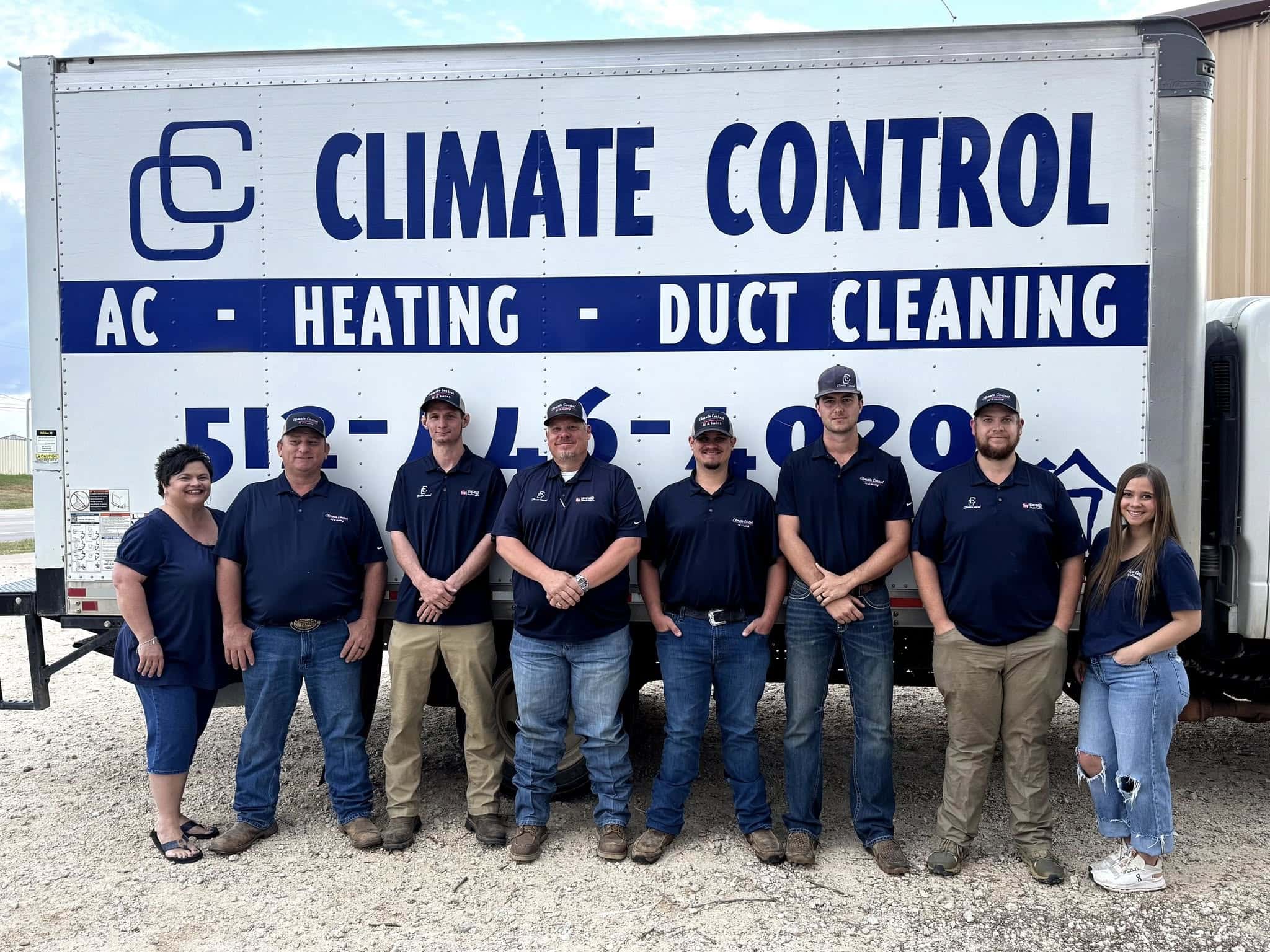
Trying to find Duct Cleaning across Milam County?
Climate Control A/C & Heating supports heating, cooling and indoor comfort in the surrounding towns.
Dial 512-446-4020 to talk it through.
A Hot, Wet Climate – the Setting for Every Choice
Warm weather in Milam County stretches across much of the calendar, and the equipment that carries the load is working harder than its owner tends to notice.
Humidity is half of the comfort problem, not an afterthought, and the coil is where the moisture condenses and drains away.
Matching capacity to the house, moving enough air and keeping the coil clean all shape the result, even before anything breaks.
Moving Heat Outdoors – Heat Moves, Cold Is Not Made
Cooling equipment does not manufacture chill; it collects heat inside the house and dumps it into the outdoor air.
A cold coil indoors takes in heat while the blower keeps air moving, and the outdoor unit holds the compressor and condenser coil that push that heat away.
Wear tends to show up in the electrical components before the big mechanical ones, which is why a quick diagnosis matters before anyone talks about replacement.
Service Calls in Hot Weather – Sorting Symptoms From Causes
AC repair that works starts with measurements, because guessing wastes time and parts; weak cooling is a symptom that many separate faults share.
Electrical faults are common, with capacitors and contactors leading the list of small failures, though a part that failed once can point to heat or a loose connection that needs attention.
Ice on the lines almost always means too little air or too little refrigerant; switching the system off and letting it thaw protects the equipment until it can be checked.
Low refrigerant means a leak, because the charge stays put when the loop is tight, and adding more without finding the leak only delays the same problem.
Condensate has to leave the house, so a blocked line sends it somewhere less welcome, and the fix is usually quick once the blockage is found.
Clues Your System Is Struggling: Small Changes, Big Hints
Air conditioners seldom quit without hints along the way; the list below covers what owners tend to notice:
- Rooms that stay warm even with the thermostat set low.
- A burning smell from the vents, especially when the weather is hot.
- Repeated short runs that never finish a cooling cycle, with indoor humidity climbing.
- Water around the air handler, which deserves a look before damage spreads.
Regular Maintenance: What a Maintenance Visit Covers
AC maintenance is a set of simple, repeatable tasks that keep a cooling system efficient; the technician cleans what gets dirty and measures what can drift.
Filters catch the dust that would otherwise coat the indoor coil, and how often it needs changing depends on the filter type, pets and the season.
The visit usually includes the condenser coil, the evaporator coil and a flush of the drain line; the report reflects measurements rather than guesses.
Deciding on a New System: Weighing the Options Honestly
Replacement is worth considering once repairs pile up on equipment that was already aging, and a good evaluation lays out repair and replacement side by side.
Older equipment may use a refrigerant that has been phased out of new production; matching parts and refrigerant correctly keeps the whole loop reliable.
Variable-speed designs hold temperature and humidity more precisely than single-stage units, which matters most where the system runs for months.
Sizing and Setup – a Calculation, Not a Guess
AC install work succeeds or fails on sizing and airflow before any equipment is delivered, and the standard method for homes is a room-by-room heat gain calculation.
Oversizing is a common mistake, and it wears out parts through constant starting, and a proper calculation avoids both extremes.
The outdoor pad, the line set, the electrical disconnect and the drain all need planning, and a startup check confirms the charge, the airflow and the temperature drop.
The Hidden Network in the Walls and Attic – What Hides Above the Ceiling
Duct work moves the air that the equipment has cooled or heated, so its design shapes every room, and a unit can be fine while the ducts hold the whole system back.
Attic duct work in Texas sees extreme heat, so insulation and tight seams earn their keep; the usual fix is sealing the seams, supporting the runs and adding insulation.
Clearing Out the Channels: Worth Doing at the Right Time
Duct cleaning is a mechanical job that brushes loose and vacuums out what has collected, and the decision should rest on what is actually in the ducts.
Dirt returns quickly if the filter is poor or the returns leak unfiltered air, and a careful provider will show the owner what was found inside.
Cooling and Heating in One: Strengths and Limits
Heat pumps move heat in both directions, cooling in summer and heating in winter; in Texas, cold snaps are short, so a heat pump covers most of the heating season.
Defrost cycles and backup heat are normal parts of winter operation, and a system that runs strips constantly deserves a diagnostic visit.
Furnace Basics – the Machinery in the Closet
Inside a gas furnace, a burner lights, a heat exchanger warms up and the blower pushes air across it, and a fault in any one step can stop the whole cycle.
Safe furnace operation depends on clear venting and working carbon monoxide alarms; never ignore an alarm or a smell of gas.
Resistance and Strip Heat: How the Elements Work
Elements in an electric air handler turn current directly into heat, which keeps the mechanical side straightforward.
Resistance heat converts every unit of power to heat, while a heat pump moves several units for each one consumed; the decision rests on the building, not just the equipment.
Heating Systems of Every Type: What to Do Before the First Freeze
Heating season in this part of Texas is brief, with sudden swings between warm days and freezing nights; heating systems are better checked before they are needed.
Heating services cover igniters and burners on gas units, reversing valves on heat pumps and elements on electric ones; the common thread is clean air passages and a blower that moves enough air.
Heating With Water – Quiet, Even Heat
Hydronic heating moves heat with water instead of air, which makes for quiet, even warmth, and they are less common in Texas than furnaces and heat pumps.
Service on boiler systems covers the burner, the water pressure, the circulator pump, the expansion tank and the safety relief valve, and annual attention keeps these systems running quietly.
Air Quality Basics – the Part You Cannot See
Residential air quality is shaped by dust, pet dander, cooking fumes, cleaning products and moisture, which makes the HVAC system the natural place to improve air quality.
Choosing a filter means balancing how much it removes against how much resistance it adds, and a technician can recommend what the equipment can handle.
Commercial air quality involves larger volumes, more occupants and strict airflow requirements, and a maintenance plan fits the building's size and hours.
Purifiers: What the Labels Mean
Air purifiers range from a stand-alone machine in one room to a unit tied into the ductwork, and the right choice depends on what needs removing.
Good results come from a purifier chosen to complement the rest of the system; the goal is a measurable improvement, not a gadget.
Light and Mist Treatments: Where They Fit
Lamps inside the cabinet work on the coil and pan, and they need replacing on a schedule; bulbs lose strength over time and need changing.
An antimicrobial mist is sprayed or fogged onto surfaces inside the system or the building; the product and method should be explained in advance.
Letting a Building Breathe – Controlled and Filtered
Planned ventilation brings in measured amounts of outdoor air and exhausts the stale air, which is where design and service make a real difference.
Exhaust fans that move air out of kitchens and baths should vent outdoors, not into the attic, and a technician who looks at the surroundings sees more than the unit alone.
Commercial Cooling: Uptime Matters
Every commercial air conditioning system serves a space with different loads from a house, such as crowds, lighting and equipment; a break in cooling can mean lost customers or a workday cut short.
Coil cleaning, belt checks and economizer inspections are part of keeping commercial equipment dependable; planning a changeout around business hours limits disruption.
Chilled Water Cooling: How They Differ From Packaged Units
Chiller systems are used in large offices, schools, hospitals and industrial plants, and they need specialized service knowledge.
Commercial Refrigeration: What Service Involves
Walk-in coolers rely on evaporators, condensing units, defrost systems and door seals working together, which is why restaurants and stores plan service ahead of busy seasons.
How Climate Control A/C & Heating Approaches Duct Cleaning throughout Milam County
Before touching a tool, the technician hears the history of the problem from the person who lives with it; the owner understands the situation before any decision.
The owner hears what needs to happen now, what can wait and what is optional; nothing starts without a clear understanding.
Questions About Your System Are Welcome
Phone 512-446-4020 to schedule service or ask what makes sense for your building.
A Last Word – Keep Things Simple
Interest in Duct Cleaning often starts with a problem, and the solution starts with a clear diagnosis, with Climate Control A/C & Heating at 512-446-4020 to start the conversation.